
Did Coca-Cola Invent Christmas?

The Definitive Guide to Santa, Branding and Cultural Influence
How a single brand (Coca-Cola) helped define the emotional look, feel and mythology of the holiday season.
When December arrives and the cultural tempo shifts, it feels as though the entire world slips into a collective performance; the kind where Christmas unfolds like a Hallmark film and everyone instinctively knows their cues. People who vow they won’t start early inevitably find themselves panic-buying tinsel, novelty mugs and a wreath large enough to threaten their home Wi-Fi.
Shops discard ordinary playlists in favour of instant Christmas bangers, because the season’s incomplete until Slade bellows at you down the freezer aisle. Your neighbour resurrects Mariah Carey before the pumpkins even soften, and since accountability matters, I owe Richard an apology. I am, unashamedly, that neighbour.
Here comes Bublé!…
Meanwhile, Michael Bublé thaws from what can only be described as an annual cryogenic resurfacing, emerging like a festive time traveller with full Demolition Man,(1993) energy. If that reference escapes you, add it to your Christmas list and thank me later.
Amid the chaos, the glitter, the playlists and the premature Mariah Carey revivals, there is one cultural cue that cuts through everything with absolute certainty- a signal that the season has shifted from anticipation to arrival.
Yet despite all these rituals; the music, the décor, the collective enthusiasm, many people feel the true beginning of Christmas in a different, unmistakably emotional moment: when a glowing red truck threads its way through snowy hillsides accompanied by a jingle so deeply rooted in cultural memory it feels almost genetic.
A truck.
A tune.
A man in red.
Coca-Cola.

It’s a soft drink so intertwined with the holiday that it could invoice Christmas for creative direction.
Few brands have ever woven themselves into a seasonal moment with such precision and longevity, and the most extraordinary part is that Coca-Cola didn’t bulldoze tradition. It organised it, clarified it and amplified it until the result felt inevitable.
Not luck.
Not myth.
Strategy.
The idea that Coca-Cola invented Santa is confidently repeated each year, usually by someone two mulled wines deep, but the truth is far more interesting, and far more impressive, especially from a brand perspective. Only a handful of brands in history have shaped cultural memory so profoundly that their creative output becomes part of the collective imagination. Coca-Cola is one of them.
Make no mistake, Coca-Cola did not invent modern Christmas, but it did shape the emotional architecture of the Christmas billions now recognise.
They set the rhythm, the visual language and the emotional tone so clearly that culture adopted it wholesale. They didn’t commercialise the season, but they did stabilise it, stitching centuries of scattered ritual into one cohesive emotional experience.
Read on to see how Coca-Cola stepped into the role of Christmas’s unofficial creative director and made it look effortless.
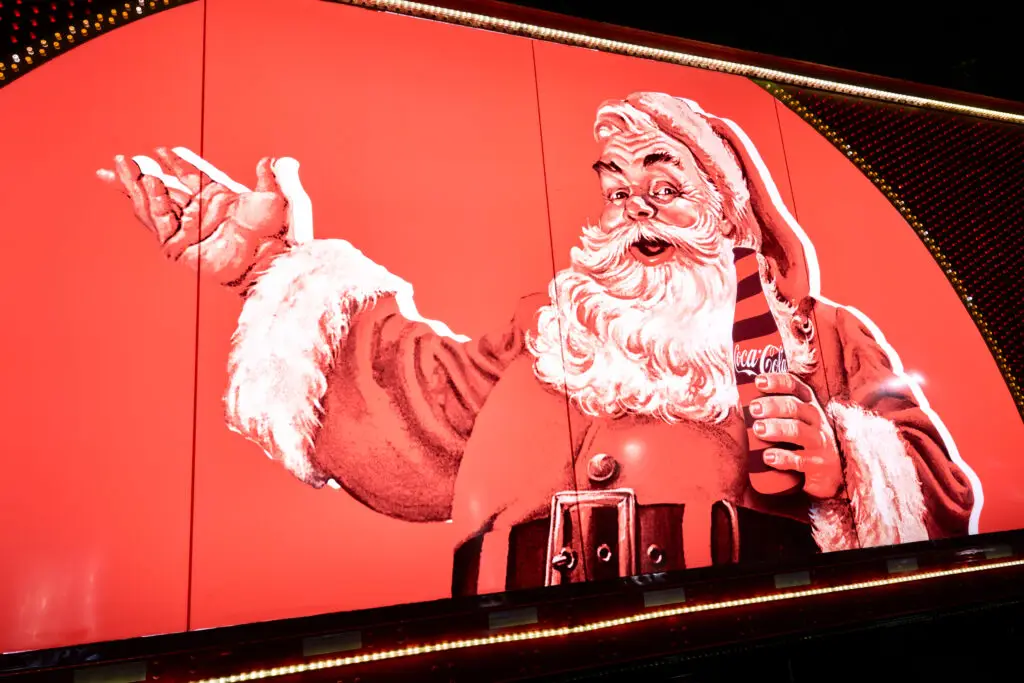
How Santa Found His Final Form: The Coca-Cola Influence
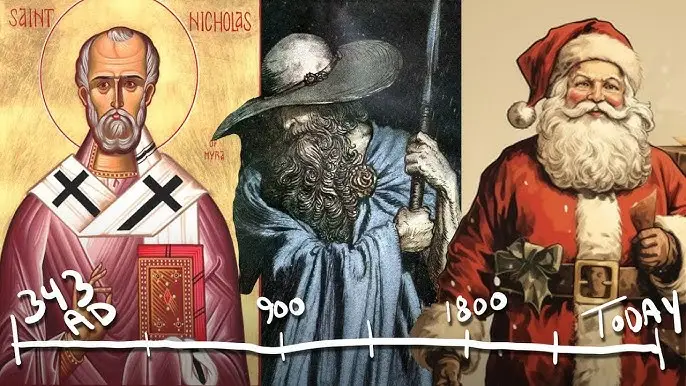
The notion that Coca-Cola created Santa Claus behaves like an urban legend, repeated with confidence yet seldom fact-checked. In truth, Santa’s lineage stretches far beyond mid-century advertising.
St Nicholas, the 4th-century bishop known for generosity.
Sinterklaas, carried to America by Dutch settlers.
Britain’s Father Christmas, symbol of winter revelry.
Odin, galloping through the sky on an eight-legged horse- an early hint of airborne gift-giving.
Washington Irving and Clement Clarke Moore, shaping Santa’s personality through storytelling.
Thomas Nast, giving Santa his first recognisable silhouette.
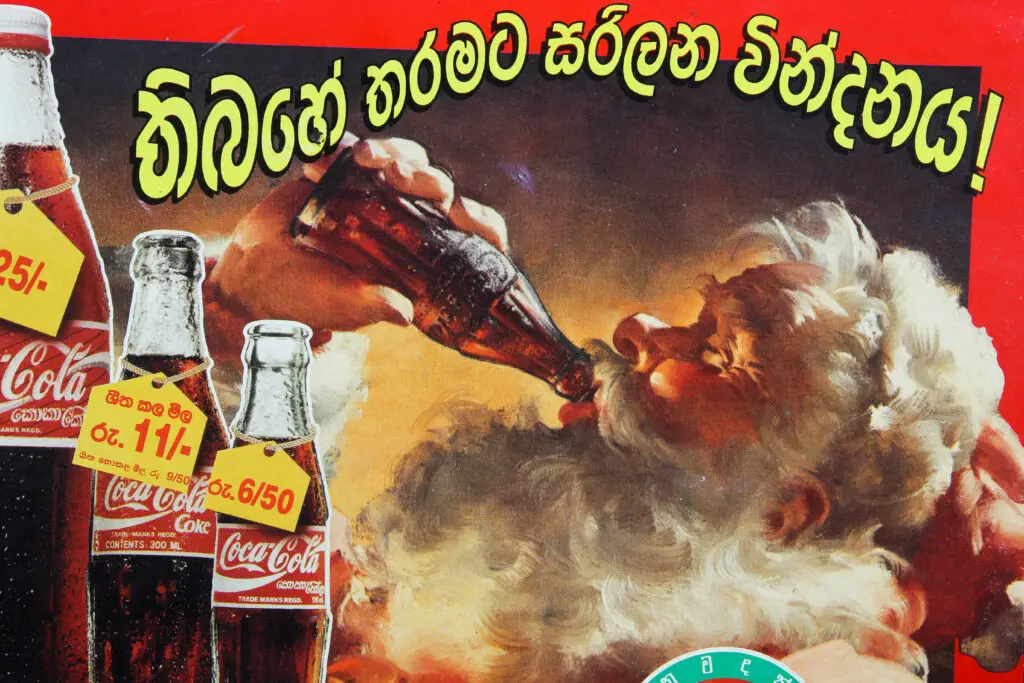
Many people assume Coca-Cola invented Santa’s red suit, but red had long appeared in earlier depictions; what Coca-Cola did was make that red definitive.
Across centuries, Santa morphed endlessly: tall or slight, sometimes elfin or wizard-like, wearing greens, browns, blues and occasionally red. Santa existed long before Coca-Cola. What he lacked was emotional coherence- one version with enough warmth, humanity and recognisability to unify centuries of fragmented myth. Coca-Cola didn’t shape Santa as a character; they shaped him as an icon. They delivered the version the world collectively accepted. It was and continues to be an astonishing achievement in branding, unifying hundreds of years of myth into one coherent global asset.
It wasn’t invention, but cultural consolidation at breath-taking scale.

Haddon Sundblom: The Illustrator Who Humanised a Myth
In 1931, Coca-Cola commissioned illustrator Haddon Sundblom to refresh their winter campaigns. This was a huge creative challenge, given that selling cold drinks in cold weather requires imaginative persuasion. Sundblom responded with a decision that would alter the course of festive visual language.
He created a Santa who felt alive: warm, rosy, approachable and human rather than ethereal. Grandfatherly, not mythical. He based Santa’s face on a retired salesman, Lou Prentiss, whose warmth anchored the aesthetic. Sundblom’s visual foundations became the bedrock of modern festive imagery:
- Saturated Coca-Cola red
- Glowing golden light
- Soft textures and natural warmth
- Emotional realism, sincere rather than theatrical
But the true magic came from Coca-Cola’s commitment. For more than thirty years, the brand repeated Sundblom’s Santa with unwavering discipline. They presented him every winter, in every advert, on every package.
“Through consistency, Sundblom’s Santa became the Santa the world recognises.”
Long before social media or viral algorithms, Coca-Cola achieved cultural saturation the original way: repetition, scale and world-class design. They didn’t invent Santa, but they articulated him so convincingly that culture embraced their version as the authentic one.
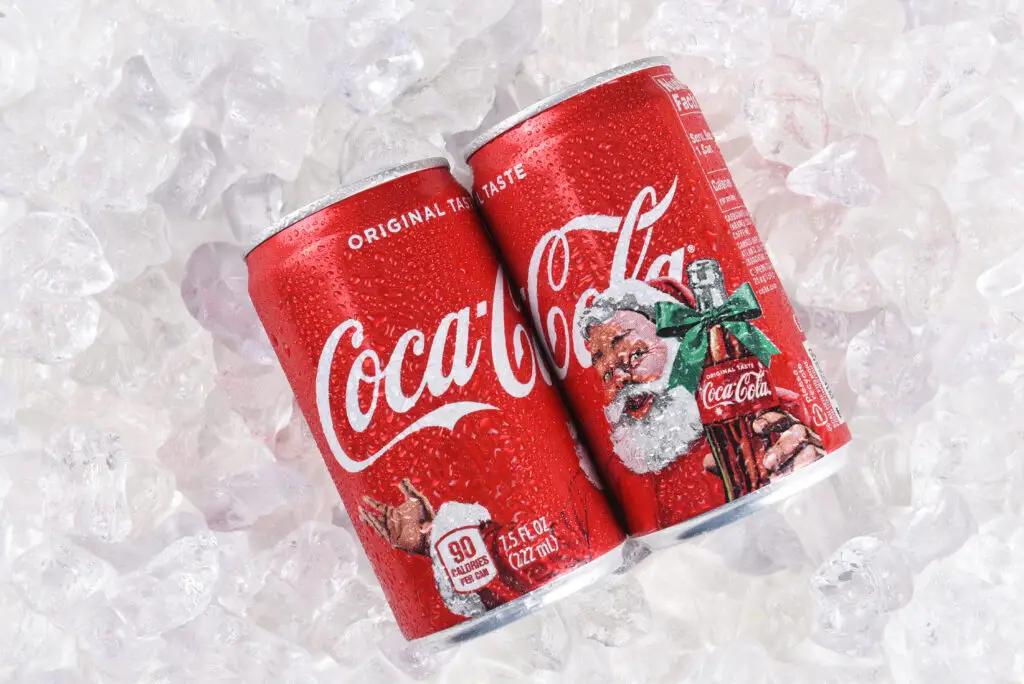
Coca-Cola and the Construction of Christmas Emotion
Christmas is not merely a date; it’s a feeling that people recognise instantly. That feeling needed a structure.
Coca-Cola distilled Christmas into a coherent emotional identity:
Warmth as the emotional temperature.
Togetherness at the centre.
Generosity shifting from transaction to symbolism.
Magic rendered gentle and intimate.
Nostalgia as the season’s emotional currency.
This was emotional engineering executed with clarity and precision. People remember occasions not for logistics but for the way they made them feel, and Coca-Cola defined that feeling with finesse.
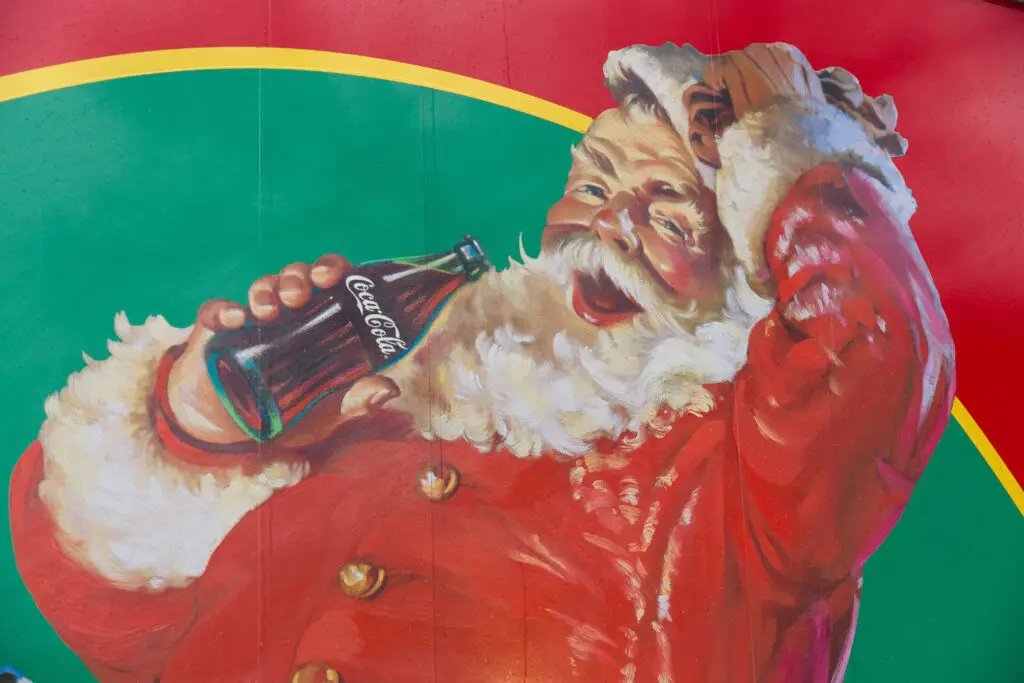
How Coca-Cola Turned Nostalgia Into Emotional Architecture
Nostalgia isn’t just fuzzy warmth; psychologists describe it as a stabilising force, a way to steady ourselves during uncertainty. Coca-Cola’s aesthetic mirrored Norman Rockwell’s Americana- soft light, gentle expressions, a simplified mid-century world that feels familiar even if it never fully existed.
And, just as the vintage Bisto Kids adverts- first introduced in 1909- distilled a kind of cosy, domestic British nostalgia into a single comforting image, Coca-Cola tapped into a parallel emotional palette; familiar, reassuring and timeless.
By immersing their festive world in this emotional aesthetic, Coca-Cola built a visual language designed to reassure.
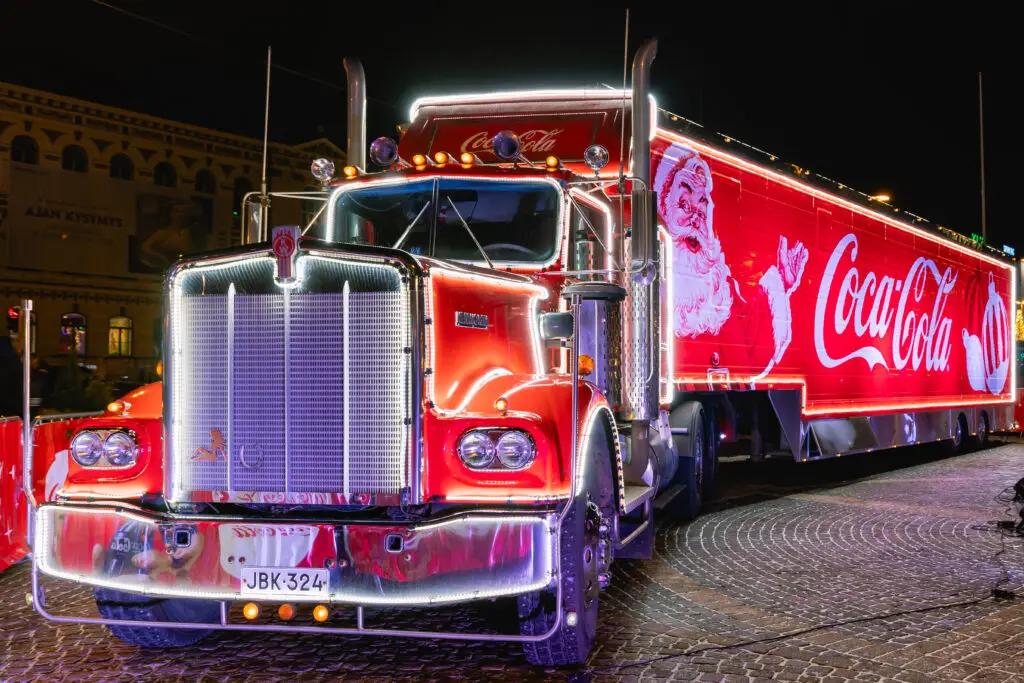
The Coca-Cola Truck: When a Brand Asset Becomes Ritual
In 1995, Coca-Cola launched the “Holidays Are Coming” commercial: glowing trucks, rising choirs, snow-brushed landscapes. It transcended the role of an advert, acting as a festive signal that slipped past logic and landed directly in the emotional core.
Then they made the trucks real.
The Coca-Cola Truck Tour became a seasonal pilgrimage- crowds gathering, families queueing, children screaming with joy as adults shed all composure. A lorry transformed into a cultural moment.
At that point, Coca-Cola owned Christmas behaviour itself.
How Coca-Cola Globalised a Feeling
As the brand expanded globally, its festive aesthetic travelled with it. In countries with deep traditions, it layered seamlessly into culture. In others, it became the reference point.
Walk through any December shopping centre from Tokyo to São Paulo and you’ll see the same emotional grammar. Yep, the Coca-Cola palette.
Even AI models default to it when asked to generate Christmas scenes.
When culture imitates a brand unconsciously, the brand stops functioning as advertising and becomes infrastructure.
This is cultural authorship.
The Definitive Answer
Let’s be clear:
Santa existed long before Coca-Cola.
Christmas existed long before Coca-Cola.
The rituals existed long before Coca-Cola.
But the version we instinctively recognise-the glow, the warmth, the nostalgia, the emotional rhythm- that’s the version Coca-Cola helped standardise.
Brand Strategy at Its Highest Form
Coca-Cola demonstrated the power of emotional territory. While other brands chased seasonal relevance, Coca-Cola occupied the emotional landscape people seek in winter: warmth, nostalgia, wonder, connection.
- They mastered semiotic saturation, creating symbols so consistent they became part of the season’s emotional shorthand.
- They built a cultural flywheel that gathered momentum year after year, turning repetition into ritual and ritual into expectation.
- They transformed brand assets into behaviours, weaving their cues into the way people celebrate.
- They showed that consistency isn’t just discipline; it’s comfort and a dependable emotional anchor in a fast-shifting world.
- They proved nostalgia isn’t accidental; it can be shaped, crafted and engineered with care.
- And they demonstrated that one well-defined story, told with unwavering clarity, can settle into culture so deeply that it feels like tradition.

Modern Echoes
Today, other brands attempt to claim emotional seasons of their own, we have Starbucks anchoring autumn with Pumpkin Spice, John Lewis shaping the emotional arc of British Christmas advertising, Disney defining the very idea of magic. Yet Coca-Cola remains the blueprint: the brand that didn’t merely participate in the season, but helped decide how it should feel.
Why This Matters Now
In a world where brands scramble for relevance and the cultural timeline resets constantly, Coca-Cola serves as a reminder that the brands who endure are not the ones who chase moments, but the ones who define the emotional territory the moment lives in.

Final Thoughts
Coca-Cola’s influence on Christmas is not a myth.
It is mastery.
Instead of replacing tradition, they brought its details into sharper emotional focus.
Instead of constructing the holiday from scratch, they voiced the sentiment that had always lived at its centre.
And instead of standing by for an invitation, they emerged as the quiet signal that the season had arrived.
The glow of the Coca-Cola truck may fade quickly, but the feeling it awakens each Christmas returns every year and reminds us that emotional territory claimed with clarity has staying power.
If you’re ready to shift from seeking relevance to creating it, Hera is ready.
Magic is not seasonal; it’s a discipline, and at Hera, we practise it all year long.

Rebecca Herbert-Thorp
Head of Operations | Training Manager