
What Blockbuster Still Teaches Us About Brands, Behaviour and Belonging
The Summer Blockbuster Isn’t What It Used To Be
The summer blockbuster isn’t what it used to be.
There, I said it.
There was a time when a handful of films didn’t just dominate the box office; they dominated culture itself. Jaws (1975), Jurassic Park (1993). Titanic (1997). Harry Potter and the Philosopher’s Stone (2001). The Dark Knight (2008). These weren’t just movies to people. They were events. They shaped conversations, fuelled playground and water-cooler debates, inspired Halloween costumes and provided entire generations with a shared cultural language.
For months on end, everyone seemed to be watching the same thing.
Today, the entertainment landscape looks starkly different. Streaming has fragmented audiences, social media has accelerated cultural cycles, and attention spans are constantly pulled in a dozen different directions. A film can generate a billion dollars at the global box office, pick up a shelf full of awards, and still disappear from public conversation before you’ve even had chance to watch it—or finished arguing about whether the cinema popcorn was worth re-mortgaging your house for.
In many ways, the blockbuster movie itself has become a victim of the modern attention economy.
Interestingly, the same thing happened to Blockbuster.
The company that once dominated home entertainment didn’t collapse because people stopped loving movies, because if anything, people consume more film and television today than at any other point in human history. We have more access, more choice and more content than previous generations could ever have imagined.
Blockbuster failed because it misunderstood what kind of business it was really in.
The company believed it rented movies.
Consumers believed it created movie night.
That distinction might sound subtle, but in branding and business terms, it changes everything.
The most successful brands are built around behaviours, not just products. They become woven into habits, rituals and cultural moments. So, when businesses lose sight of the emotional role they play in people’s lives, decline often follows—even when demand appears stronger than ever.
Few companies demonstrate that lesson more dramatically than Blockbuster.
When Movie Night Was A Ritual
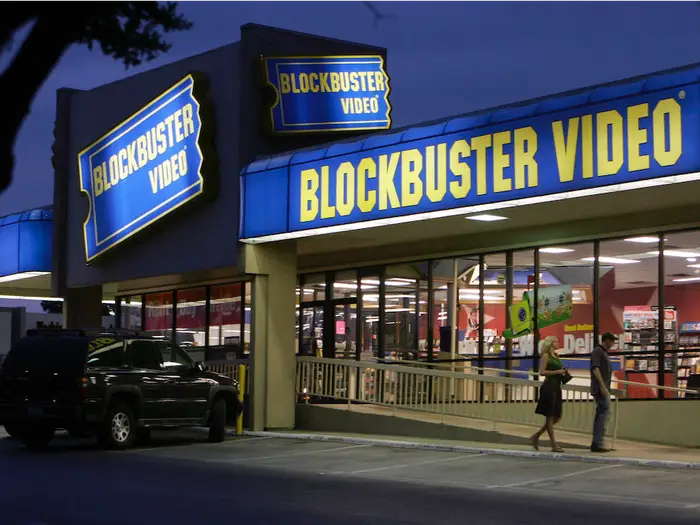
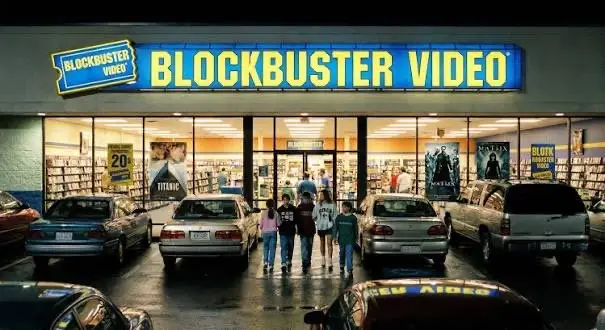
For those of us who grew up in the 1990s and early 2000s, Blockbuster acted as a beloved signpost that the weekend had arrived, it wasn’t just a shop.
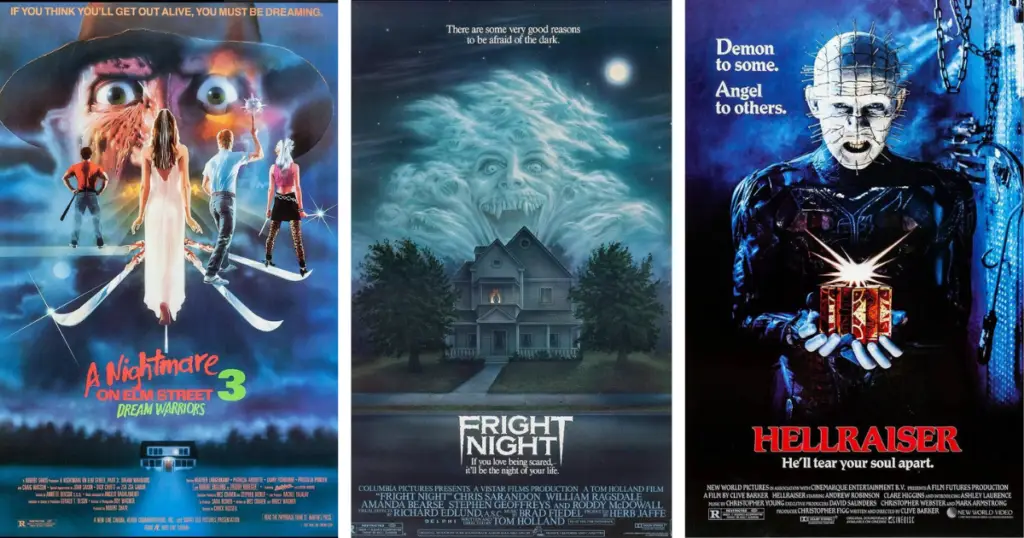
On a Friday evening, the glowing blue-and-yellow sign promised something more than a transaction. It signalled the beginning of an experience. Families piled out of cars and into brightly lit stores. Parents attempted the impossible task of finding a film that satisfied everyone in the household. Teenagers headed straight for the horror section while pretending they weren’t terrified by half the cover art. I remember it distinctly- Chucky glared from the shelf. Pennywise lurked in the shadows. Pinhead stared directly into my soul. Many of us were terrified by the covers long before we were old enough to watch the films.
There was anticipation and possibility in the air.
The smell of warm popcorn lingered near the counter. Movie trailers played on screens overhead. New releases occupied prime shelf space like celebrities at a red-carpet event. (Let’s remember, we had to typically wait 6 months just to rent a film after cinematic release). Somewhere, somebody was desperately searching for the final copy of the latest blockbuster while another customer triumphantly walked out of the shop clutching it like they’d just lifted the World Cup. And inevitably, someone (sensible) in every family uttered the same phrase:
“Don’t forget—we actually have to bring this back.”
At its peak in 2004, Blockbuster operated more than 9,000 stores worldwide, employed around 84,000 people and generated approximately $5.9 billion in annual revenue, making it the undisputed giant of the home entertainment industry.
All at once, it was a successful retailer, and a cultural institution.
Yet just six years later, in 2010, the company filed for Chapter 11 bankruptcy protection carrying close to $1 billion in debt.
Today, only one Blockbuster store remains, in Bend, Oregon. Part museum, part tourist attraction and part nostalgic time capsule, it stands as a reminder of a world that feels both remarkably recent and strangely distant.
As both a child of the 90s and a brand strategist, there’s something bittersweet about that reality.
While Blockbuster has become one of the most studied business failures in history, the real story is far more nuanced than the familiar narrative suggests.

The Real Product Was Never The Movie
One of the most enduring principles in brand strategy is that consumers rarely buy what businesses believe they’re selling.
Nike doesn’t really sell trainers. It sells aspiration, achievement and self-belief.
Apple’s success was never built solely on hardware specifications. It sells simplicity, identity and a sense of belonging to a particular worldview.
Disney may charge admission fees, but what families are really purchasing are core memories.
The strongest brands understand that products are vehicles through which people access emotional outcomes.
Blockbuster was no different.
Customers weren’t making special trips because they desperately wanted a VHS tape or DVD. They were buying anticipation. They were buying togetherness. They were buying the experience of choosing something as a family, melting into the sofa and creating a shared memory.
The tape was the mechanism.
The experience was the product.
The Brand That Embedded Itself Into Behaviour
What Blockbuster achieved from a branding perspective was remarkably difficult.
It embedded itself into weekly behaviour.
Marketing scientist Byron Sharp describes mental availability as the likelihood a brand comes to mind in relevant buying situations. The strongest brands don’t just achieve awareness; they become mentally associated with particular moments in consumers’ lives.
Blockbuster achieved exactly that.
Rainy Sunday afternoon?
Blockbuster.
School holiday sleepover?
Blockbuster.
Friday night takeaway?
Blockbuster.
The brand became cognitively linked to specific behaviours and emotional moments. Consumers didn’t have to think about where to go. The answer was already waiting in their minds.
This level of association is one of the most valuable forms of brand equity any company can build.
It’s also one of the reasons Blockbuster remains culturally relevant long after its commercial decline.
People don’t remember quarterly earnings reports.
They remember experiences.
They remember wandering the well lit air-conditioned aisles.
They remember arguing over film choices.
They remember discovering hidden gems they would never have found otherwise.
Personally, I remember one time ignoring the advice of a Blockbuster employee who tried to convince me not to rent Glitter (2001), starring Mariah Carey.
Renting a film felt like a personal and financial investment back then. A new release rental could easily cost £3.99–£4.99 at a time when the minimum wage for an 18–21-year-old in the UK was just £3.20 an hour. Choosing badly felt like a genuine financial and emotional setback.
There was no quick YouTube review to reassure you that your decision was sound. No Rotten Tomatoes score in your pocket. No TikTok creator telling you whether it was worth two hours of your life.
You rolled the dice and hoped for the best.
For the record, I rather enjoyed Glitter. It falls firmly into the “it’s so bad it’s good” category.
No judgement please.
We all have guilty pleasures from back in the day we slogged through to the bitter end because we’d already taken the punt.
The critics—and the chap behind the counter that night—may have disagreed with my choice of rental and even my post-fondness for the film, but thankfully they aren’t writing this article.
# JusticeForGlitter.
Anyway, I digress…
What made Blockbuster particularly interesting from a brand perspective was that discovery wasn’t outsourced to an algorithm.
It was human.
The staff weren’t retail workers scanning barcodes and stacking shelves. Many were genuine film enthusiasts: modern-day librarians of cinema who could recommend a cult classic, explain why a remake wasn’t as good as the original, or passionately convince you to give an obscure indie film a chance.
Long before Netflix introduced “Because You Watched…” recommendations, Blockbuster employees were delivering- upon request- personalised suggestions in real time.
Popular culture eventually turned these cool characters into stereotypes of their own. The film geek became a recognisable movie archetype: the walking encyclopaedia of film trivia who could quote obscure directors, debate whether the sequel ruined the franchise, and tell you exactly why the original was better.
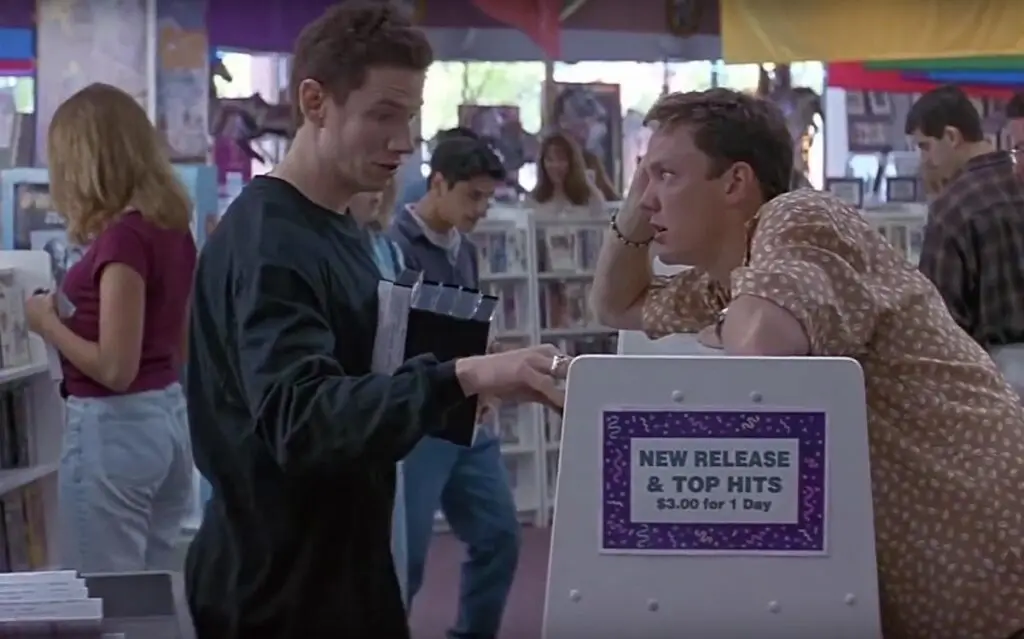
Perhaps no character captured this better than the part-time video store employee, Randy Meeks in Scream (1996).
The self-appointed teenage guardian of horror movie rules wasn’t just comic relief; he represented a growing cultural fascination with cinephiles as trusted experts. Randy knew the genre because he lived and breathed it. In many ways, he embodied a similar passion customers encountered behind the counter at their local Blockbuster- or at least for me, anyway.
There was something reassuring about that human expertise.
Recommendations came from conversations rather than code or trendjacking performative outrage or enthusiasm.
Discovery felt organic and personal rather than predictive.
You didn’t need an algorithm analysing your viewing habits. You simply needed a movie nerd in a branded polo shirt who was willing to explain, in considerable detail, why you absolutely had to watch The Usual Suspects (1995).
Ironically, many streaming platforms are now trying to recreate digitally what Blockbuster provided naturally: trusted curation.
The technology has evolved.
The human need for genuine well-informed guidance hasn’t.
In effect, Blockbuster had accidentally built a physical version of what streaming platforms would later spend billions trying to perfect: discovery.
The store itself functioned as an interface. New releases were positioned for maximum visibility. Focused genre aisles helped customers navigate vast catalogues. Staff recommendations acted as personalised algorithms long before anyone used the phrase machine learning. Even wandering the shelves created opportunities for serendipitous discovery.
You might arrive looking for the latest blockbuster and leave with a guilty pleasure, or or an obscure cult classic because the cover caught your eye.
What modern platforms attempt through code, Blockbuster often achieved through environment, design and human interaction.

When Entertainment Was Still Shared
Part of Blockbuster’s success had very little to do with video rentals and a great deal to do with the cultural moment in which it existed.
The brand flourished during a period when entertainment was still largely collective.
Families gathered around a single television. Friends rented films together. Popular culture moved more slowly because culture itself moved more slowly. There were fewer channels, fewer devices and dramatically fewer options competing for attention.
Importantly, there was also far less personalisation.
Today, every member of a household can inhabit their own entertainment universe in isolation. We have our own streaming profiles, our own recommendation algorithms and our own viewing habits. Four people can live under the same roof and consume entirely different media without ever watching the same movie or programme.
Convenience has increased enormously.
Choice has exploded.
But something else has perhaps sadly and quietly diminished.
Shared entertainment experiences.
Blockbuster belonged to a world where compromise was unavoidable. Families chose one film because there was one television. Friends negotiated because there wasn’t instant access to everything ever made.
The debates, the discussions and even the disagreements were part of the experience.
Looking back, most people aren’t actually nostalgic for VHS tapes.
They’re nostalgic for what those tapes represented:
A slower pace.
Shared anticipation.
Time spent together.
That distinction matters because it helps explain why Blockbuster continues to occupy such a powerful place in collective memory.
The brand didn’t become attached to a product.
It became attached to an era.
The Revenue Model That Became A Brand Problem
Financially, Blockbuster’s business model worked.
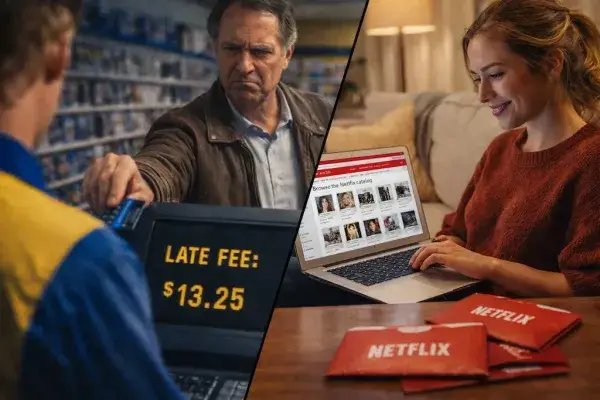
A significant portion of the company’s revenue came from late fees. At their peak, late fees reportedly generated hundreds of millions of dollars annually and were estimated to account for roughly 15–20% of Blockbuster’s operating profits.
On paper, it seemed sensible.
Customers paid penalties when they returned films late. The longer they forgot, the more money Blockbuster made.
The problem was that many customers hated it.
Not mildly disliked it.
Hated it.
It’s worth remembering that in 2000, the hourly minimum wage for an 18–21-year-old in the UK was just £3.20. A late fee wasn’t an abstract annoyance. For some customers, it represented almost an hour’s work because they forgot to return Miss Congeniality (2000) on a Sunday night.
The fees represented friction.
They created negative emotional associations with the brand.
However, because consumers had few alternatives, Blockbuster could afford to ignore the irritation.
Ignorance was bliss for a while.
But not for long.
Because somebody built an entire business model around removing it- spoiler alert: Netflix did it!
One of the most important lessons in branding is that customers rarely leave because of one dramatic problem. More often, they leave because small frustrations accumulate over time. The real disruptor wasn’t necessarily Netflix. It was a consumer whose expectations had quietly changed.
Netflix recognised that truth and capitalised on it.
Blockbuster didn’t.
The $50 Million Decision That Became Business Legend
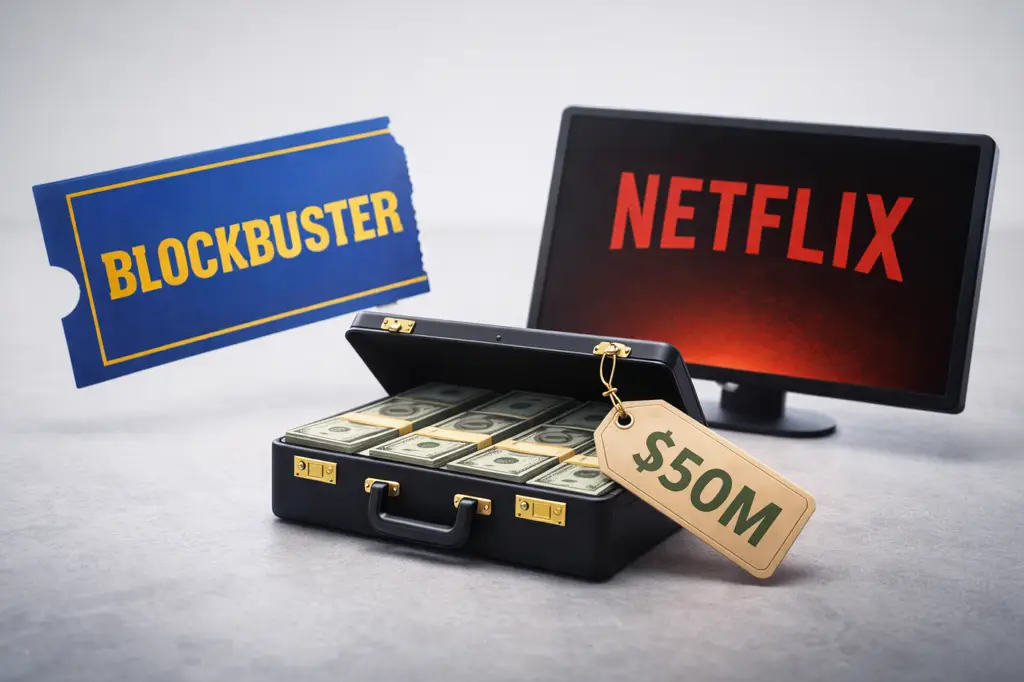
In 2000, Netflix founders Reed Hastings and Marc Randolph reportedly approached Blockbuster with an offer to sell their fledgling DVD-by-mail business for $50 million.
Blockbuster declined.
Business folklore has turned this into one of the most famous missed opportunities in corporate history.
The decision itself isn’t the most interesting part of the story. The real lesson lies in what each company believed it was selling.
Blockbuster looked at Netflix and saw a small DVD-by-mail operation.
Netflix looked at consumers and saw changing behaviour.
The startup understood that people weren’t emotionally anchored to visiting stores. They weren’t loyal to DVDs. They certainly weren’t passionate about late fees.
Many just wanted easy, affordable access to entertainment on a Friday night after a long week.
Netflix removed the journey to the store.
Then it removed the late fees.
Then it removed physical media altogether.
Blockbuster focused on defending its infrastructure.
Netflix focused on eliminating friction.
The result reshaped an entire industry, and eventually, culture itself.
Today, Netflix is no longer a disruptive outsider mailing DVDs around America.
It’s one of the world’s most recognisable entertainment brands, producing Oscar-winning films, prestige television and global cultural phenomena.
Blockbuster saw a DVD company.
Netflix saw the future.

The Blockbuster Trap
Blockbuster’s downfall illustrates a pattern that appears repeatedly throughout business history.
Kodak invented the first digital camera in 1975 but hesitated to embrace digital photography because it threatened film sales.
Nokia dominated the global mobile phone market throughout the early 2000s but underestimated the importance of software ecosystems and touchscreen devices following the launch of Apple’s iPhone in 2007.
BlackBerry became synonymous with professional communication throughout the 2000s, only to misread how quickly consumer expectations were shifting towards touchscreens, apps and lifestyle-led mobile experiences.
Different industries.
Different decades.
The same mistake.
These companies certainly didn’t lack intelligence, resources or talented people; they failed because success can become a seductive trap.
When revenue, infrastructure and internal incentives are built around one way of doing things, innovation starts to feel dangerous. New opportunities are viewed not as opportunities at all, but as threats to existing success.
This is what we call The Blockbuster Trap.
The moment a business becomes so successful in its current model that adapting to the future feels like dismantling the very thing that made it successful in the first place.
For Blockbuster, thousands of stores represented enormous brand visibility, customer reach and market dominance.
They also represented enormous inertia.
Moving away from them would have required questioning the very foundation of the business.
Netflix had no legacy system to defend.
No property portfolio.
No late-fee revenue stream.
No emotional attachment to how things had always been done.
It was free to trailblaze and build the future because it wasn’t busy protecting the past.
That’s often the paradox of disruption: The businesses best positioned to innovate are frequently the least motivated to do so.
The businesses with the least to lose are often the ones willing to take the biggest risks.
So, by the time the industry heavy weight realises the rules have changed, somebody else is already writing the next chapter, and thus the market leader inevitably becomes a foot note in their story.
When Infinite Choice Becomes The Problem
Ironically, some of the challenges Blockbuster accidentally solved have become major problems for modern streaming platforms.
In its launch in 2007, Netflix streaming promised expansive choice.
Consumers embraced it, but have since discovered, nearly twenty years on, that boundless choice can be exhausting.
Research consistently shows viewers spend significant amounts of time scrolling through streaming platforms trying to decide what to watch. Nielsen found the average viewer spends around 10.5 minutes searching during each streaming session, while more recent studies suggest some viewers spend as much as 110 hours per year deciding what to watch.
Around one in five viewers abandon the search entirely without choosing anything to watch.
Think about that for a moment.
We’ve solved access.
We’ve solved convenience.
We’ve solved availability.
But somehow we’ve created a new problem: too much choice.
Psychologists refer to this phenomenon as choice overload.
When options become limitless, decision-making becomes harder rather than easier.
Blockbuster, perhaps unintentionally, provided a solution.
Its catalogue was finite.
Its shelves were carefully curated.
Its recommendations came from humans rather than algorithms.
There were enough choices to feel exciting, but not so many that consumers became paralysed.
It’s a little like visiting a restaurant with a menu so large it requires its own postcode.
At some point, abundance stops feeling liberating and starts feeling stressful. Eventually, you lose your appetite and forget what you were hungry for in the first place.
Blockbuster didn’t offer everything, but it offered enough- and increasingly, that feels like a surprisingly fresh/modern idea.
Why The Brand Survived When The Business Didn’t
Perhaps the most fascinating aspect of Blockbuster’s story is that while the business disappeared, the brand endured.
Marketers often misunderstand nostalgia.
Nostalgia isn’t really about the past. Nostalgia is what happens when memory acquires meaning.
Nostalgia is often dismissed as sentimentality, but in reality, it’s evidence of meaning.
People don’t become nostalgic for every brand they’ve encountered. They’re nostalgic for the brands that became attached to emotionally significant moments.
People aren’t nostalgic for VHS tapes any more than they’re nostalgic for dial-up internet. Nobody genuinely misses waiting ten minutes for a webpage to load or hearing the robotic mating call of a modem trying to connect.
What people miss is who they were during those moments.
The friendships.
The family routines.
The Friday nights.
The sleepovers.
The excitement.
Blockbuster became attached to emotionally significant memories. Over time, those memories transformed into a powerful form of brand equity that survived long after the company itself declined.
Most failed businesses vanish, but Blockbuster became immortal because of its emotional imprint.
That’s a remarkable achievement when you consider how many once-dominant brands have faded almost entirely from public consciousness.
Many people under the age of twenty-five have never rented a VHS tape. Some have never even rented a DVD.
Yet they still recognise the Blockbuster logo.
That isn’t business success.
That’s cultural relevance.
And therein lies the difference.
The Business Died. The Brand Didn’t
Most companies die twice.
First, the business fails, then people forget they ever existed.
Blockbuster only experienced the first part.
Yes, the stores disappeared, along with the revenue and market, but somehow, the brand remained.
That’s unusual.
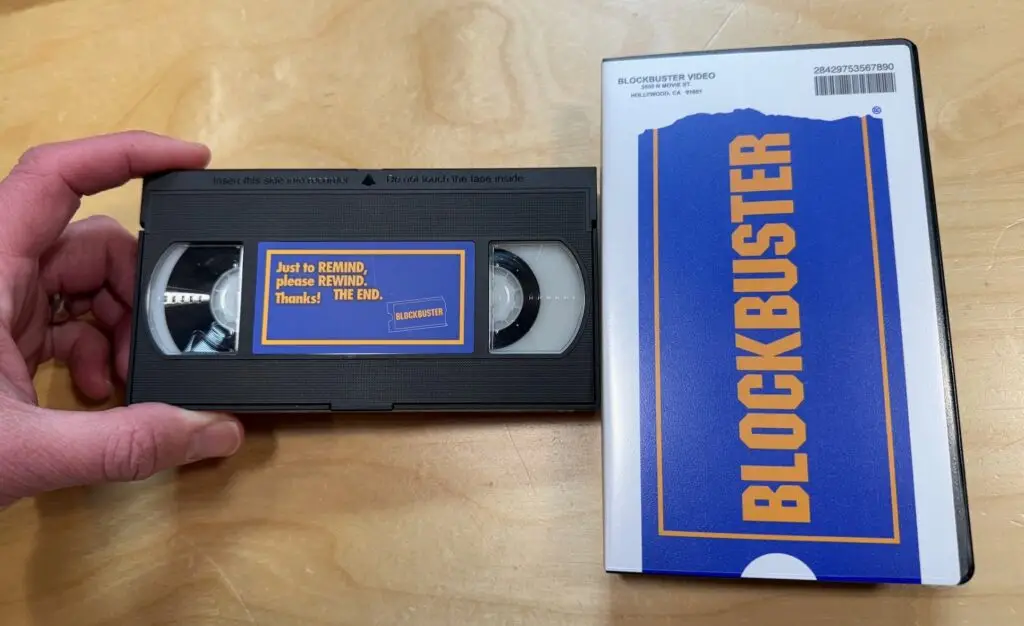
Consumers don’t rent Blockbuster products anymore, but they still wear Blockbuster T-shirts. People still visit the final remaining store in Oregon. They still share memories online. They still smile when they see the logo.
From a brand strategy perspective, that’s pretty incredible because it demonstrates the difference between business equity and brand equity.
Business equity lives on balance sheets.
Brand equity lives in people’s minds.
One can disappear while the other survives.
The most valuable brands aren’t necessarily the ones generating the most revenue today. They’re the ones that create memory structures strong enough to outlive the business itself.
Blockbuster became one of those brands.
In an age obsessed with performance metrics, dashboards and quarterly results, it’s a useful reminder that the strongest brands don’t just occupy market share. They occupy headspace.
And sometimes, something rather extraordinary happens.
Even after a business disappears, the brand continues to occupy our heart space too.
That’s incredibly difficult to achieve, and almost impossible to manufacture deliberately.

The Blockbuster Mistake Is Happening Everywhere
It’s tempting to think Blockbuster belongs to a different era.
A VHS problem.
A retail problem.
An entertainment problem.
It isn’t.
The Blockbuster mistake happens every day.
Brands become attached to products instead of needs, processes instead of outcomes, and infrastructure instead of behaviour.
They optimise what already exists while consumers quietly move on.
The companies most at risk are often the ones that feel safest.
The category leaders.
The household names.
The businesses with the largest market share and the greatest confidence in their current model.
BlackBerry, anyone?
History repeatedly shows that disruption rarely begins with technology alone.
It begins when somebody understands people better.
Netflix understood that consumers weren’t loyal to DVDs.
Uber understood people weren’t loyal to taxi companies.
Airbnb understood people weren’t loyal to hotel chains.
The real competitive advantage wasn’t innovation; it was empathy and the ability to recognise changing behaviours before everyone else does.
That’s as true today as it was in 2000.
And it’s why the story of Blockbuster remains relevant far beyond entertainment.
At its heart, this isn’t really a story about video rentals, it’s a story about what happens when businesses become experts in what they do, but stop paying attention to why customers do it.
Let’s not forget, as consumers, we rarely care about your infrastructure- we care about the outcome.
The brands that survive are usually the ones that remember that.
Is Netflix Facing Its Own Blockbuster Moment?
The irony is that many of the frustrations Blockbuster failed to solve now exist within streaming itself.
Consumers increasingly complain about subscription fatigue, fragmented libraries, rising costs and endless scrolling.
The challenge is no longer access, but navigation.
The next great disruption in entertainment may not come from providing more content, but from helping people find meaning within the content already available.
It’s an interesting thought…
If Blockbuster teaches us anything, it’s that consumer behaviour changes long before market leaders realise it has. If Netflix succeeded by solving the problems Blockbuster created, then somebody else may be riding in their blind spot and eventually leave them in their rear view by solving the problems they’ve created and refuse to see.
What Brands Should Learn From Blockbuster
It’s easy to dismiss Blockbuster as a horrifying cautionary tale about technology.
It’s much more useful to see it as a lesson in brand strategy.
The truth is that Blockbuster didn’t lose to a better product. It lost to a better understanding of changing consumer behaviour.
For modern brands, there are several lessons hidden within its story.
1. Define Your Brand By The Experience You Create, Not The Product You Sell
The most successful brands understand the emotional outcome they deliver.
Products change. Technology evolves. Entire industries transform.
The emotional need behind them often remains remarkably consistent.
Brands that define themselves too narrowly risk becoming attached to delivery mechanisms rather than customer value.
Consumers don’t buy products.
They buy outcomes.
The moment a business forgets that, it becomes vulnerable.
2. Pay Attention To Behaviour Before Technology
Businesses often focus on technological disruption because it’s visible.
Behavioural change is harder to spot, even though it’s usually the most important signal.
Consumers didn’t wake up one morning in 2007 desperate for Netflix streaming technology.
They wanted convenience.
They wanted simplicity.
They wanted fewer frustrations.
Netflix succeeded because it recognised those behavioural shifts before its competitors did.
Technology was simply the tool.
The insight came first.
The companies that win aren’t always the ones with the newest technology.
They’re often the ones paying closest attention to changing human behaviour.
3. Friction Is Often More Dangerous Than Competitors
Late fees and price points generated revenue.
They also generated resentment.
Some businesses still make the same mistake today.
Complex checkout processes.
Poor customer service.
Confusing websites.
Complicated subscriptions.
Every point of friction creates an opportunity for somebody else to build a better experience.
Customers may tolerate inconvenience, but that doesn’t mean they won’t leave the moment a better alternative appears.
The most dangerous competitor is often the one that removes the thing your customers quietly hate.
4. Community Is A Competitive Advantage
One of the most overlooked aspects of Blockbuster’s success was its social nature.
As we’ve explored, the store wasn’t just a place to acquire entertainment.
It was a place where people interacted.
Browsed together.
Asked for recommendations.
Shared opinions.
Bumped into friends.
Discovered something new.
Those film-loving employees were part of the experience:
Part recommendation engine.
Part movie critic.
Part cultural guide.
In a post Covid landscape, and an increasingly digital world, brands often underestimate the value of human connection, but consumers continue to seek belonging, expertise and community.
The platforms may change.
The basic human need doesn’t.
As AI, automation and algorithms become more common, genuine human experiences may become even more valuable.
5. Brand Equity Can Outlive Business Success
Most failed businesses disappear.
Blockbuster didn’t.
The company collapsed.
The brand endured.
That tells us something important:
Revenue creates businesses.
Emotion creates brands.
When a brand becomes attached to meaningful memories, zeitgeist, shared experiences and cultural moments, it can remain relevant long after the original business model has vanished.
That’s the difference between being remembered and being missed.
Blockbuster somehow became both.
The strongest brands occupy market and mindshare.
If they’re truly exceptional, they eventually occupy heart space too. That’s the unicorn trifecta of a successful brand.
That’s why people still talk about Blockbuster decades after its final credits began to roll.

Final Insight
Blockbuster most definitely didn’t fail because people stopped loving movies.
It failed because it misunderstood what people loved about watching them.
The company believed its value lay in distributing entertainment.
Consumers experienced its value as something far more emotional.
A ritual.
A destination.
A shared experience.
A reason to spend time together.
Netflix slowly but surely dismantled the inconvenience and transformed entertainment forever. But in solving friction, it also removed some of the ceremony that surrounded a classic movie night.
Consumers chose convenience because convenience usually wins, but decades later, people still talk and smile about Blockbuster.
It’s not because they miss late fees.
It’s not because they miss holding their breath as they pressed play, wondering whether they’d discovered a hidden gem or wasted their Friday night.
And it’s certainly not because they miss discovering that the previous renter hadn’t been kind enough to rewind.
They remember the anticipation.
The togetherness.
The feeling.
Perhaps what we miss isn’t really Blockbuster at all.
Perhaps we miss the version of ourselves that existed alongside it.
You know, the family gathered around one television with no pinging phone notifications and social media distractions.
The friend who always picked the worst movie.
The excitement of committing to a choice because there wasn’t an endless alternative waiting behind the next click.
Blockbuster became the backdrop to thousands of ordinary moments that, with the benefit of hindsight, no longer feel ordinary at all.
And that’s why the brand survived in public consciousness and fondness.
Its story extends far beyond movie rentals, missed acquisitions or its place in business-school case studies. What makes Blockbuster enduringly fascinating is what it reveals about the relationship between brands and the people who invite them into their homes and lives.
The strongest brands don’t simply distribute products or services. They become part of routines, relationships and memories. Over time, they weave themselves into the fabric of everyday life so naturally that people stop thinking about them as brands at all. They become part of how life is experienced. That’s anything but ordinary- that’s extraordinary.
Blockbuster achieved exactly that.
For millions of people like me, it wasn’t a video rental store.
It was Friday night.
It was family time.
It was the excitement of choosing something together, wondering who you’d see in there, seeing new trailers for the first time, the anticipation of taking the choice home and the ritual of settling onto the sofa with a bowl of popcorn and the promise of an evening shared.
The shelves have gone.
The tapes have gone.
Almost every store has disappeared.
Yet the memories remain.
People still remember the debates in the blue carpeted aisles. The recommendations (and warnings) from staff. The thrill of finding the last copy of a new release. They remember who they were, who they were with and how those moments felt.
Few brands achieve that today.
Fewer still achieve it after they’ve gone.
The business may have disappeared, but the meaning survived.
At Hera, we believe that’s the real lesson for brands in 2026.
Consumers rarely remember products in isolation.
We remember experiences.
We remember emotions.
We remember the role a brand plays in our lives and the memories it helps create.
And, in branding, that’s about as close to immortality as a business can get.