
Share This Article
How reputation, succession and institutional credibility collide in one of Britain’s oldest institutions.

The British monarchy is one of the most enduring institutional brands in human history — a sovereign identity that has survived civil war, abdication, world wars, tabloid eras and generational reinvention. And now, the royal brand is having to deal with the Prince Andrew scandal.
Its power does not come from executive authority. It comes from symbolism. The institution’s legitimacy rests on the public’s willingness to believe that the Crown represents something greater than the individual who wears it.
Its most valuable currency is trust.
But as any human being with life experience knows, trust rarely fractures cleanly once strained. It erodes gradually through hesitation, scepticism and a thousand small recalibrations of belief. The ongoing crisis surrounding Andrew Mountbatten-Windsor is not simply another royal scandal. It is a real-time structural test of whether one of the world’s oldest institutional brands can reconcile hereditary power with modern expectations of accountability.
Surprisingly little analysis has examined the Prince Andrew crisis through the lens of institutional brand strategy. Viewed from that perspective, the situation reveals dynamics often overlooked in traditional royal commentary.
At its core, the Andrew crisis exposes a tension confronting many legacy institutions. Systems built for permanence must now operate in a culture that demands visible accountability. In brand terms, this creates a paradox: the same qualities that give institutions their longevity—tradition, hierarchy and continuity—can also make them slower to adapt when public expectations shift.
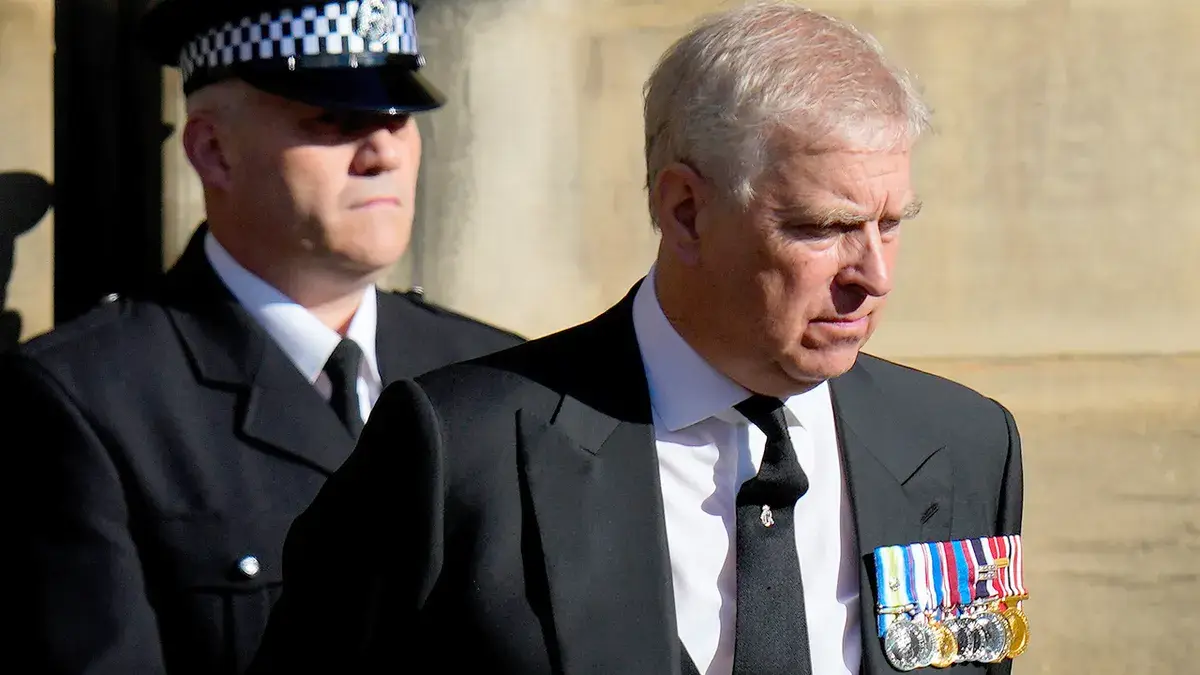
Legal Innocence vs Reputational Liability
Before examining the institutional implications, precision matters.
Andrew Mountbatten-Windsor has not been criminally convicted in relation to his association with Jeffrey Epstein and has consistently denied wrongdoing.
In 2022, he settled a civil lawsuit brought by Virginia Giuffre without admission of liability.
Reports at the time linked the payment to private royal finances, including claims that the late Queen may have assisted and that Andrew was attempting to raise funds through the sale of his Swiss chalet, though no official breakdown of the settlement funding was ever publicly confirmed.
Legally, that distinction is critical.
But brands do not operate solely in courts of law. If they did, crisis management departments would barely exist.
Brands operate in the court of public perception.
And in that court, the standard of judgment is not beyond reasonable doubt — it is emotional credibility.
Corporate leaders resign without convictions. CEOs step aside when judgement is questioned. University leaders step down when their actions compromise academic integrity and public trust.
Even viral moments — such as the Coldplay Kiss Cam controversy of 2025 — have shown how quickly public perception can reshape reputations.
Institutions distance themselves from figures whose associations undermine credibility even in the absence of criminal findings.
Kevin Spacey’s swift removal from House of Cards, Johnny Depp stepping down from the Fantastic Beasts franchise, Uber founder Travis Kalanick’s resignation, and the departure of WPP founder Sir Martin Sorrell following a misconduct investigation, all illustrate how reputational risk alone can trigger institutional separation.
Hereditary status does not exempt an institution from that dynamic.
From a brand perspective, Andrew’s conduct — particularly his continued friendship with Epstein after Epstein’s conviction and his widely criticised 2019 BBC Newsnight interview — was catastrophically misaligned with the values the monarchy claims to represent.
The infamous interview in particular became a defining reputational moment.
In moments of reputational crisis, tone, empathy and awareness become decisive.
The broadcast was widely regarded as a catastrophic communications failure: defensive, detached and lacking emotional awareness.
In brand terms, his performance ruptured the emotional contract between institution and public, and that wound has never healed.

The Arrest: A Symbolic Escalation
On 19 February 2026 — his 66th birthday — Andrew Mountbatten-Windsor was arrested by Thames Valley Police on suspicion of misconduct in public office relating to allegations connected to his time serving as a UK trade envoy. Police searched properties linked to him in Norfolk and Berkshire, and he was held for approximately twelve hours before being released under investigation while enquiries continue.
Symbolically, the arrest marked unprecedented territory because it represents the first arrest of a senior royal of Andrew’s standing in modern British history.
That matters.
Not because arrests always equate to guilt. But because institutions built on hierarchy rely on the perception that those closest to power operate under the same standards as everyone else. When proximity to power intersects with criminal investigation, reputational gravity intensifies.
History offers examples of institutions whose credibility was deeply damaged when misconduct appeared to be protected internally.
One widely cited case is the Catholic Church sexual abuse crisis, which unfolded publicly over several decades but became globally visible in the early 2000s. The Church’s prolonged failure to address internal misconduct came into sharp focus following The Boston Globe’s Spotlight investigation — damaging trust for decades not only because of the abuse itself, but because the institution appeared to protect its reputation before protecting its people.
The perception that institutional loyalty was prioritised over transparency, justice and accountability proved profoundly corrosive to public trust. Institutions that appear to prioritise internal protection over external credibility often face long-term reputational damage.
As the Andrew situation continues to unfold, the Royal brand is learning that heritage may confer prestige, but it offers no protection from the public demand for accountability.
The Palace’s Response To The Prince Andrew crisis: Necessary, But Is It Sufficient?
To its credit, Buckingham Palace did not ignore the crisis.
Prince Andrew stepped back from public duties in 2019. In 2022, his military titles and patronages were removed. He ceased using the title “His Royal Highness” in an official capacity and began defending legal matters as a private citizen.
The separation also became physically visible.
In 2024, King Charles withdrew the financial support that had helped Prince Andrew maintain Royal Lodge, the large 30-room estate set within 98 acres in Windsor Great Park that he had occupied since 2004. Without that backing, Andrew faced increasing pressure to leave the property.
Reports at the time suggested he could relocate to the smaller Frogmore Cottage on the Windsor estate, though details of any long-term arrangement were never formally confirmed.
Subsequent reports in 2025 and 2026 indicated that he later spent time at the King’s privately owned Sandringham estate, where he has reportedly stayed at Wood Farm while longer-term accommodation on the estate is considered.
From a brand perspective, the relocation represents a reputational boundary being drawn in real estate.
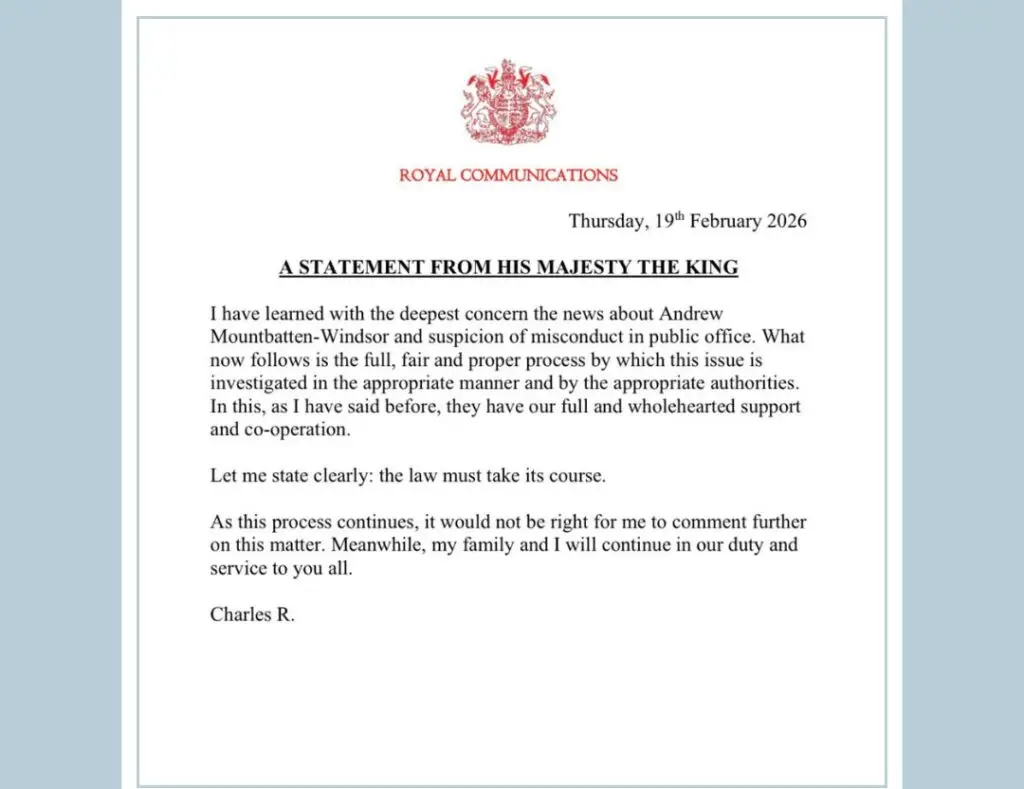
More recently, King Charles publicly responded to the ongoing police investigation by expressing “deep concern” and stating that “the law must take its course,” while confirming that authorities would have the Royal Family’s full cooperation. The carefully neutral wording is telling.
Rather than defending his brother, the King emphasised due process and institutional responsibility, signalling that the monarchy is not above the law.
From a brand perspective, the statement forms part of a broader strategy to protect the credibility of the royal institution by distancing the modern “working royal” brand from Andrew’s personal conduct. By framing the issue around accountability and legal process rather than family loyalty, the Palace is attempting to reinforce public trust and maintain the monarchy’s core brand values of duty, stability and legitimacy.
These were meaningful structural moves and reflect a classic containment strategy:
- isolate reputational risk
- remove formal representation
- reduce visibility
- protect the constitutional core
- allow legal processes to proceed externally
Historically, the monarchy’s crisis doctrine — often summarised as “never complain, never explain” — relied on dignified silence.
For decades, that approach worked.
Silence reinforced mystique. Distance preserved hierarchy. Time diluted scandal.
However, we no longer live in a deferential media culture. In a digital accountability era, silence can read as evasion, and minimalism can appear protective. Containment can feel cosmetic rather than corrective.
Containment may limit reputational damage, but legitimacy cannot simply be contained back into existence.
For modern institutions, credibility is no longer preserved through distance alone. Today’s audiences expect visible accountability, ethical clarity and a willingness to confront uncomfortable truths head-on.
The Palace’s containment strategy may stabilise the immediate crisis, but the deeper question remains: can a centuries-old institution adapt its communications model quickly enough to maintain trust in a culture that increasingly demands not just dignity — but demonstrable accountability?
The Succession Question: Symbolism Over Probability
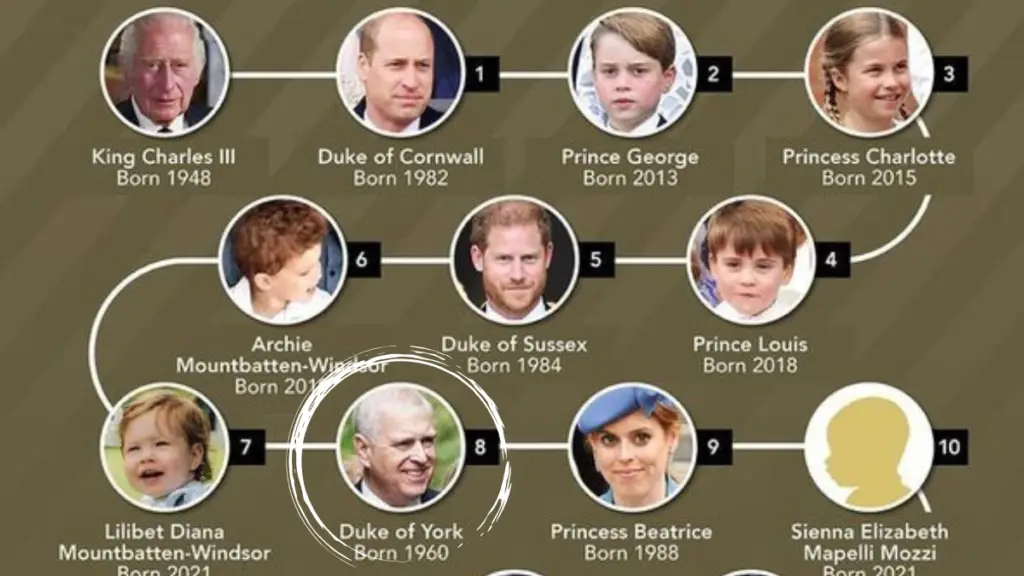
At the time of writing, Andrew Mountbatten-Windsor remains eighth in the line of succession to the British throne — a position that is constitutionally remote but symbolically significant.
In practical terms, the likelihood of his accession is negligible. Symbolically, however, the line of succession functions as more than a constitutional list. It is the monarchy’s most visible expression of continuity — a living structure that signals how legitimacy passes from one generation to the next.
In brand terms, succession is part of the monarchy’s core architecture.
When a figure facing sustained ethical scrutiny remains within that structure, the issue becomes less about probability and more about signalling. The question is not whether that individual will inherit the Crown. The question is what the institution communicates by continuing to include them. Every institution sends signals through what it protects, what it changes, and what it chooses to leave untouched.
Retention within the line of succession — however remote the position — can risk implying that lineage carries greater institutional weight than integrity or reputational credibility.
For an institution whose authority is largely symbolic, those signals matter.
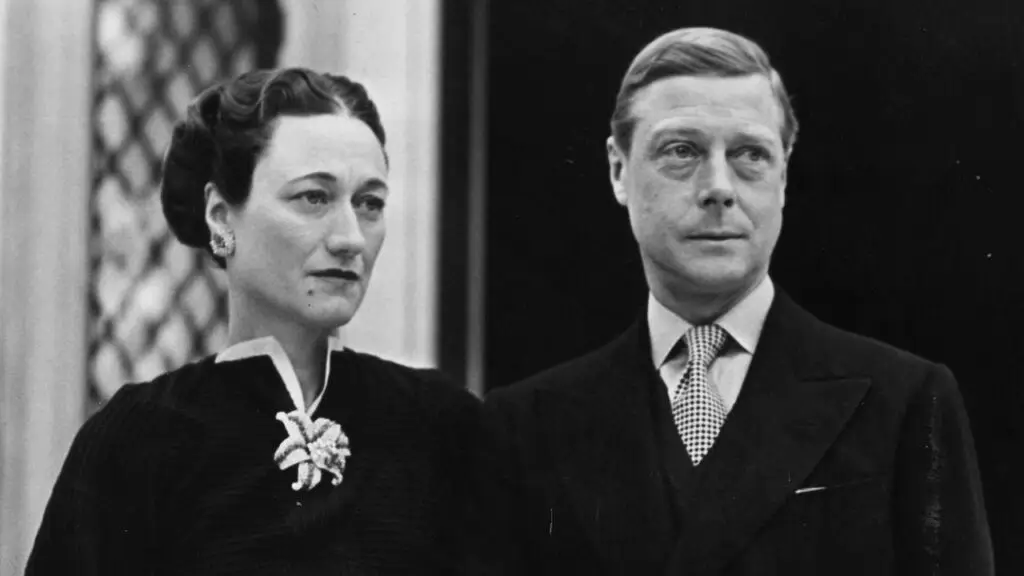
History offers a reminder that the monarchy has confronted such tensions before. In 1936, King Edward VIII abdicated the throne after his intention to marry Wallis Simpson triggered a constitutional crisis. Faced with the possibility that the monarch’s personal circumstances could destabilise the institution itself, the Crown prioritised the survival of the system over the position of the individual. Edward stepped aside after less than a year on the throne, allowing George VI to restore institutional stability.
From an institutional perspective, the episode remains one of the clearest demonstrations of the monarchy’s survival instinct. When credibility is threatened, preservation of the system has historically taken precedence over preservation of the individual.
Today, debate about removing Prince Andrew from the line of succession has entered parliamentary discourse. Any such change would require coordinated legislation across multiple Commonwealth realms, making reform legally complex and constitutionally delicate.
Aggressive intervention carries risks.
Continuity forms the foundation of the institution. But continuity alone is not the only strategic consideration.
Institutions — like brands — are judged not only by their structures, but by what those structures communicate.
Retention communicates caution and restraint. Removal would communicate a willingness to prioritise reputational integrity over proximity of bloodline. Neither choice is purely administrative.
Both are messages.
The Trust Equation
The monarchy cannot exist outside public sentiment. Its legitimacy depends on it.
Polling consistently reveals a generational divide in attitudes toward the institution.
According to YouGov surveys conducted between 2023 and 2025, support for the monarchy among Britons aged over 65 regularly exceeded 65%, while approval among those aged 18–24 frequently fell below 40%.
The institution remains broadly popular. However, the demographic trend line is unmistakable. Brand equity is cumulative. It strengthens through consistent alignment and weakens through repeated strain.
The Prince Andrew crisis intersects with contemporary anxieties around privilege, power imbalance and elite protection — themes that resonate particularly strongly with younger audiences. For an establishment whose authority ultimately rests on public consent rather than coercion, even marginal attrition matters.
Through a branding lens, the issue is not constitutional distance but symbolic proximity: the longer Andrew remains formally connected to the institution, the harder it becomes for the monarchy to fully reset the narrative around accountability and trust.
The Economic Dimension: This Is Not Symbolism Alone
The Royal Brand carries material value.
Independent estimates suggest the monarchy contributes billions annually to the UK economy through tourism, global profile, media rights and soft-power influence. Few entities command comparable global recognition.
The British monarchy operates simultaneously as a constitutional symbol, diplomatic asset and cultural brand. The central challenge for the Royal brand is that its soft power depends on moral credibility. When institutional reputation weakens, the ripple effects extend beyond headlines. They influence diplomatic perception, Commonwealth relationships and international standing.
This is not simply a private family matter.
It is a national brand matter.
What Should the Monarchy Do Next?
The monarchy is not merely a constitutional structure; it is one of the world’s most recognisable institutional brands. Like any brand built on legitimacy, continuity, and moral authority, its resilience depends not just on tradition but on the systems that protect public trust.
In moments of reputational stress, governance becomes brand strategy.
From that perspective, Hera would recommend several structural steps that could strengthen institutional credibility for the decades ahead.
1. Initiate a Formal Succession Review
Even if constitutional reform ultimately proves impractical, initiating a transparent review signals seriousness. The process itself communicates that proximity to the throne is not immune from scrutiny. From a brand governance perspective, it reinforces a critical principle: no institution retains legitimacy if its accountability mechanisms stop where power begins.
The review process would matter as much as the outcome. Visibility alone signals that the monarchy understands that trust must be maintained, not assumed.
2. Clarify Governance Publicly
Strategic transparency around oversight mechanisms, financial separation between public funding and private family life, and ethical expectations would reinforce credibility without diminishing dignity.
Mystique need not require ambiguity.
In fact, modern brand trust is built less on secrecy and more on visible systems of responsibility. When audiences understand how decisions are governed, institutions appear less insulated and more accountable.
Clarity does not weaken authority — it legitimises it.
3. Institutionalise Safeguards
Visible advisory oversight on conflicts of interest, conduct expectations, and reputational risk would demonstrate structural evolution.
Not performative reform, but measurable reform.
For a global institution whose legitimacy rests partly on moral authority, governance frameworks are not administrative details — they are brand infrastructure.
Safeguards communicate that the institution has learned from crisis and embedded those lessons into its operating model.
4. Modernise Crisis Doctrine
Yes, “never complain, never explain” once reinforced authority.
In an era of deference and limited media scrutiny, silence preserved mystique. But in a modern accountability culture, calibrated acknowledgement may prove more effective.
Humility, when genuine, strengthens legitimacy.
In 2026, institutions rarely survive reputational crises through silence alone. They survive by demonstrating that governance evolves faster than scandal.
5. Define the “Working Royal” Brand Boundary
One of the monarchy’s ongoing reputational challenges is the blurred line between family members and institutional representatives. Clearer definition of the “working royal” structure — including expectations, privileges, and conduct standards — would reduce reputational spillover from private family behaviour.
Modern organisations protect brand equity by clearly defining who represents the institution and who does not.
For the monarchy, that boundary is not just symbolic; it is reputational risk management.
6. Separate Family Narrative From Institutional Narrative
The royal family exists simultaneously as a family and a constitutional institution, and crises often blur the two. Strategically distinguishing between these narratives could strengthen public understanding that personal behaviour and institutional governance are not the same.
In brand terms, this is the difference between private identity and institutional brand architecture.
When those narratives are allowed to merge unchecked, reputational damage can spread beyond the individuals involved.
7. Introduce a Royal Ethics Charter
Many modern institutions publish formal ethical frameworks outlining expectations for leadership conduct, conflicts of interest, and accountability. For an institution whose legitimacy rests heavily on moral authority, a Royal Ethics Charter could serve as a powerful signal of evolution. Such a framework would not need to undermine tradition or constitutional neutrality. Instead, it could articulate the principles that guide conduct for those representing the monarchy publicly.
In brand terms, this would formalise the values the institution already claims to embody: duty, integrity, service, and responsibility.
More importantly, it would demonstrate that those values are not performative or ceremonial — they are operational.
The Crossroads
The Royal Brand stands at a pivotal moment.
As we’ve explored, it can continue relying on containment — allowing investigations to proceed, limiting visibility and trusting that time will dilute the controversy. Or it can treat this moment as a catalyst for strategic recalibration: clarifying governance, reinforcing standards, modernising crisis response and signalling unequivocally that institutional integrity supersedes individual proximity.
What matters now is the precedent this moment establishes. The assumed standing of the Royal Family is no longer granted without question.
When members of an institution become associated with conduct that contradicts its moral authority, the damage is not merely reputational. It challenges the symbolic foundation that allows the institution itself to endure.
Tradition may define the monarchy’s royal brand identity. But accountability will determine its brand credibility.
The Crown has survived for a millennium because it adapts — sometimes slowly, sometimes reluctantly, but decisively when required.
History built the Crown. But trust — and the public’s willingness to believe in it — is the currency that keeps it in circulation.
And like any currency, its brand value depends entirely on whether people continue to have faith in it.
Editorial Note
This article explores Andrew Mountbatten-Windsor’s public reputation through the lens of brand, power and cultural perception. It is not intended to excuse or minimise the seriousness of the allegations associated with him or the experiences of those who have spoken about harm.
At Hera, we believe situations involving power, influence and accountability deserve thoughtful scrutiny, and survivors of abuse deserve to be heard and supported.
If you or someone you know has experienced sexual abuse or exploitation, support is available. In the UK you can contact Rape Crisis England & Wales (0808 500 2222) or the NSPCC Helpline (0808 800 5000).
Confidential help and guidance are available through these organisations.
Written by

Rebecca Herbert-Thorp
Head of Operations Training Director