

Why Michael Jackson Refuses to Become HIStory
Nearly two decades after his death, Michael Jackson remains trapped in the present tense.
When you think about it, that’s quite rare.
Most public figures eventually settle into history. We may still listen to their music, watch their films or admire their achievements, but the argument quietens down. Culture decides where to place them and gradually moves on.
Michael Jackson never received that outcome.
Every few years, the conversation returns. A documentary reignites scrutiny. A lawsuit resurfaces. A biopic sparks another wave of debate. A clip goes viral and suddenly millions of people are discussing Michael Jackson all over again.
Seventeen years after his death, Michael Jackson continues to generate the kind of emotional reaction most public figures struggle to generate while they’re alive.
That’s unusual.
And the more you look at it, the stranger it becomes, because this isn’t really a story about a musician.
It’s a story about what happens when a person becomes bigger than the person they once were.
Before the Debate, There Was the Michael Jackson Phenomenon
It’s easy to forget this.
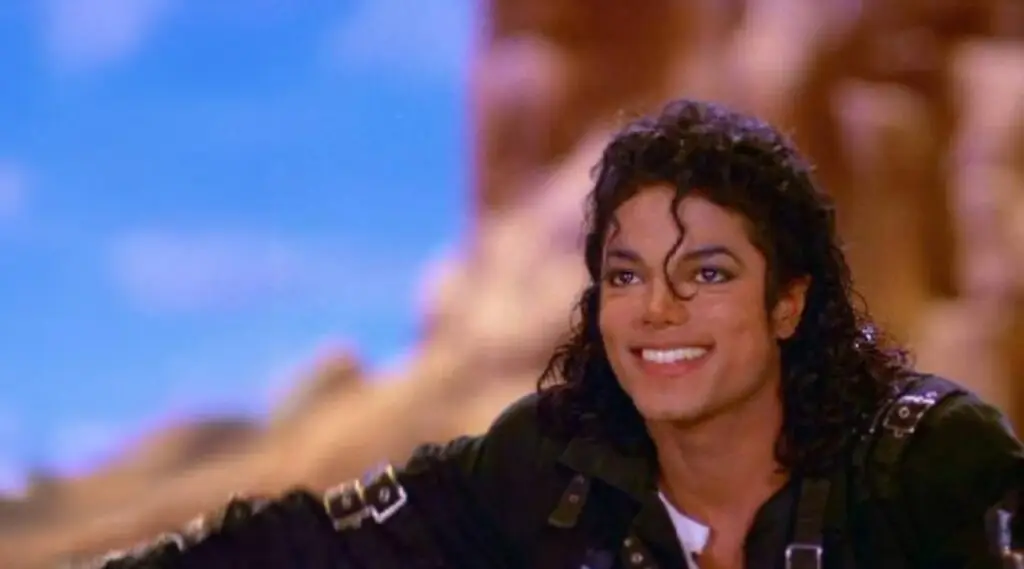
For younger generations, Michael Jackson often arrives wrapped in controversy, documentaries and cultural debate. But before he became a cultural battleground, he became a cultural phenomenon.
And not just a successful one.
A genuinely unprecedented one.
Jackson remains one of the best-selling artists in history, with estimated sales exceeding 500 million records worldwide. Thriller remains the best-selling album ever released. He won 13 Grammy Awards, earned 26 American Music Awards and helped redefine what global superstardom looked like.
But statistics only tell part of the story.
The scale of Michael Jackson’s fame is difficult to explain to audiences raised in the age of fragmented media. At his peak, he was arguably the most recognisable person on Earth. His 1993 Super Bowl halftime performance attracted more viewers than the game itself. His music videos weren’t just promotional tools; they were cultural events. Thriller, Beat It and Billie Jean helped transform music videos into cinematic experiences and fundamentally changed expectations of what pop music could look like.
Long before social media created viral moments, Michael Jackson was creating them.
Yet perhaps his most remarkable achievement wasn’t musical at all.
It was visual.
Most brands spend decades trying to achieve instant recognition. They invest millions in logos, colours, packaging and design systems in the hope that people will recognise them at a glance.
Michael Jackson achieved something far rarer.
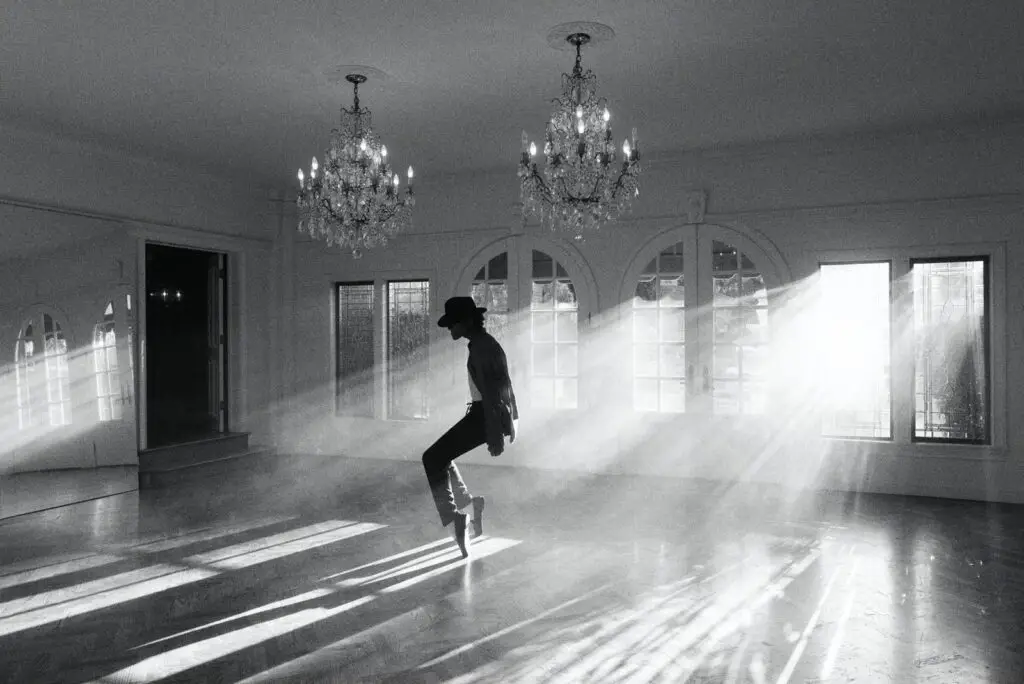
He became recognisable in silhouette.
A fedora tilted forward. A sequinned glove catching the light. White socks above black loafers. A figure frozen mid-moonwalk.
Remove the face and most people still know exactly who they’re looking at.
That’s extraordinary.
Very few public figures ever reach that level of visual shorthand. Elvis had the jumpsuit. Marilyn Monroe had the white dress. Charlie Chaplin had the bowler hat and cane.
Michael Jackson had an entire visual language.
And like all powerful symbols, those visual cues eventually became detached from the person himself.
They entered culture.
Today, people who have never watched a full Michael Jackson performance can still recognise the silhouette. They understand the reference. Recognise the costume. They know the pose.
Because the moment a person becomes recognisable in silhouette, they stop functioning purely as a person and start functioning as a symbol.
Symbols travel differently.
They’re easier to remember.
Easier to reference.
Easier to inherit.
Which may be one reason Michael Jackson continues to find new audiences long after his death.
Even today, his catalogue generates billions of streams and his songs regularly return to charts.
In many ways, Michael Jackson may be one of the first global superstars whose posthumous life has become almost as culturally significant as his actual life.
Most artists leave behind a body of work.
Michael Jackson left behind an ecosystem.
Every stream, reaction video, documentary, think piece, TikTok edit and tribute performance adds another layer to the story.
The Story That Refuses to End
The recent Michael Jackson biopic offers a useful example.
On the surface, it was another retelling of a life already well documented, analysed and debated from almost every conceivable angle.
Yet audiences turned up in huge numbers.
The film reportedly opened to around $97 million domestically and $217.4 million worldwide, breaking records for a music biopic opening and proving, once again, that public fascination with Michael Jackson remains commercially powerful.
But the most interesting part of the film wasn’t only how many people watched it.
It was where the story chose to stop.
Rather than continuing into the most controversial chapters of Jackson’s life, the film was reportedly reworked to end before the allegations first emerged in 1993. In other words, audiences were given Michael Jackson at the height of his global superstardom, before the story became the cultural argument we now recognise.
Predictably, that decision became a story in itself.
Some viewed it as a creative choice.
Others viewed it as a strategic omission.
From a brand perspective, however, the debate revealed something much more interesting.
Every retelling is an act of selection.
Every documentary, biopic, article, podcast and social media thread decides where a story begins, where it ends and which moments deserve emphasis.
The argument surrounding Michael Jackson isn’t simply about what happened.
It’s about who gets to frame what happened; that is a very different conversation.
What happened next made the point even clearer.
Off the back of renewed interest in Jackson’s story, Netflix released Michael Jackson: The Verdict, a three-part documentary series revisiting the 2005 criminal trial and the allegations that continue to shape public debate around his legacy.
One major cultural product celebrated the rise.
Another returned to the reckoning.
Both attracted attention.
Neither settled the argument.
If anything, they reinforced the central point.
Michael Jackson is no longer a story being told.
He is a story being negotiated.
Why Facts Rarely Settle Cultural Debates
Any serious discussion of Michael Jackson has to acknowledge the allegations that have followed his legacy since 1993.
They are not a footnote.
They remain one of the primary reasons the debate surrounding him continues.
But disagreement over those allegations alone isn’t what makes Michael Jackson unusual. History is full of controversial figures. What makes him unusual is that, decades later, there is still no broadly accepted cultural conclusion.
One of the most important lessons in branding is that facts rarely settle arguments about meaning.
Two people can look at the same evidence and leave with entirely different conclusions because they are often answering different questions.
One person may be asking what happened.
Another may be asking what it means.
Michael Jackson sits directly at the intersection of both.
The public debate surrounding him has never really been about facts alone. It is about significance. It’s about how societies remember extraordinary people whose stories refuse to fit neatly into a single narrative. It is about whether talent changes responsibility, whether influence changes accountability, and whether admiration and discomfort can coexist.
Those questions don’t belong exclusively to Michael Jackson.
They belong to all of us.
Which is why the conversation continues.
The Power of Borrowed Memory
There’s another force at work here.
Nostalgia.
Nostalgia doesn’t make criticism disappear, but it does change how criticism is experienced.
Most brands spend vast amounts of money trying to become memorable. The truly powerful ones become woven into memory itself.
Michael Jackson’s music is attached to millions of personal stories. School discos. Family holidays. Long car journeys. Weddings. First loves. Childhood bedrooms.
When people hear Don’t Stop ’til You Get Enough or Man in the Mirror, they are often reconnecting with something much deeper than a song.
They’re reconnecting with a moment in their own life.
That’s what makes nostalgia so powerful.
It transforms entertainment into autobiography.
With this in mind, people aren’t always defending Michael Jackson.
Sometimes they’re defending a memory.
Sometimes they’re defending a version of themselves.
For brands, memories occupy a very different place in the mind than information. You can challenge a fact. You can dispute an argument. It is much harder to argue somebody out of a feeling.
Michael Jackson Isn’t Being Remembered. He’s Being Recreated.
Most discussions about legacy assume something fairly simple.
A person lives.
They leave behind a body of work.
History remembers them.
But that’s not what’s happening here.
Michael Jackson isn’t being preserved.
He’s being rebuilt.
Constantly.
Search for Michael Jackson on TikTok and you’ll find dance challenges, performance clips, conspiracy theories, fashion analyses, AI recreations, fan edits and teenagers reacting to performances that took place decades before they were born.
On YouTube, reaction channels routinely generate millions of views from people discovering him for the first time.
Across Reddit, Instagram and fan communities, debates about his music, influence and legacy continue as though he were still releasing albums.
Most public figures rely on anniversaries to remain relevant.
Michael Jackson is being continuously reintroduced by the internet itself.
In some respects, Michael Jackson has become the internet’s most persistent ghost. Every time culture thinks it has moved on, an algorithm, documentary, lawsuit, anniversary or viral clip pulls him back into view.
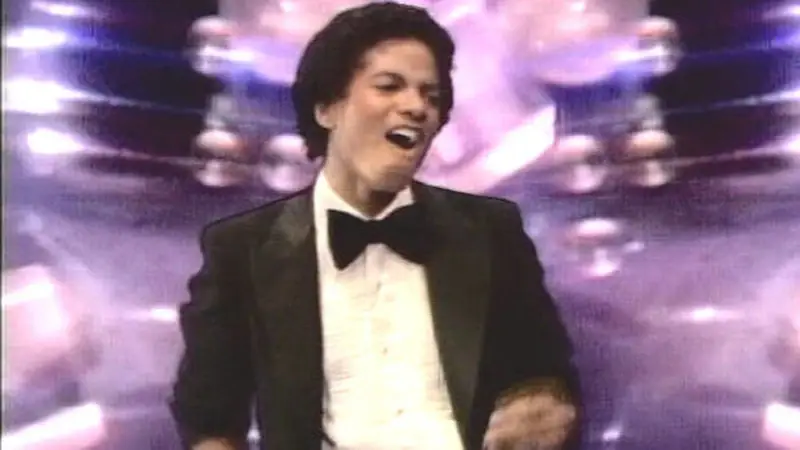
The Michael Jackson discovered by a teenager on TikTok is not necessarily the Michael Jackson experienced by someone who watched the Motown 25 performance in 1983.
The Michael Jackson encountered through a Netflix documentary is not the same Michael Jackson encountered through a fan account, a YouTube reaction channel, a biopic or a Spotify playlist.
Each generation inherits a different story.
Each retelling introduces a different emphasis.
And it may be one of the defining characteristics of modern cultural brands.
The internet doesn’t preserve people.
It remakes them.
When a Person Becomes a Reference Point
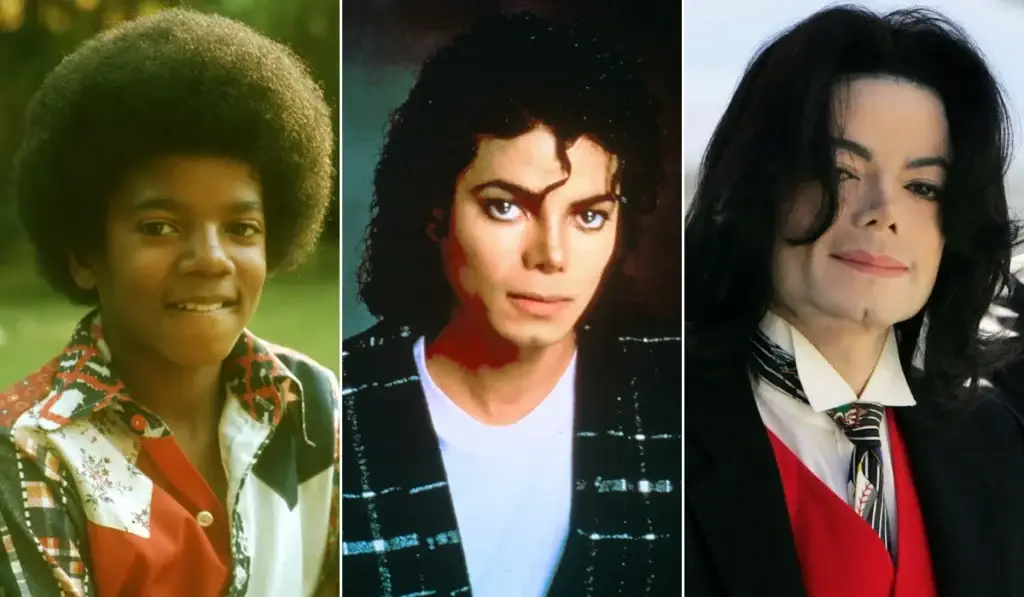
Somewhere along the way, Michael Jackson became a reference point.
Mention his name and people aren’t just talking about a musician. They’re talking about celebrity, power, race, talent, media scrutiny, accountability and memory.
That’s a remarkable transformation.
Few public figures become shorthand for conversations that extend far beyond themselves.
Think about how often Michael Jackson’s name appears in discussions that have nothing directly to do with Michael Jackson. He is referenced in conversations about cancelled artists, celebrity culture, cosmetic surgery, separating art from artist, race, media treatment and institutional power.
His name has become a shortcut into bigger cultural territory.
That’s so much more than celebrity.
That’s infrastructure.
The Ownership Paradox
For brands, this is where the story becomes particularly interesting.
Most organisations believe they own their brand. Legally, they do. They own the trademarks, the intellectual property, the logos and the assets attached to it.
What they don’t own is meaning.
A company can own a logo, but it cannot own what that logo comes to represent in millions of individual minds. Coca-Cola doesn’t own every memory attached to a bottle shared on a summer afternoon. Disney doesn’t own every childhood memory created in front of a castle. Apple doesn’t own what innovation, status or creativity means to every person who carries an iPhone.
Those meanings exist somewhere else.
They exist in culture.
Culture has a habit of taking things people create and turning them into something larger, messier and far less controllable than originally intended. In fact, the strongest brands often encounter the same paradox: the more culturally significant they become, the less they belong exclusively to the people who created them in the first place.
Meaning begins to escape ownership.
People reinterpret it through their own experiences. They project onto it, argue about it, defend it, challenge it and add new layers to it. Over time, the brand stops functioning as a product, a company or even a person. It becomes a canvas onto which culture paints its own ideas.
That’s exactly what happened to Michael Jackson.
At some point, he stopped being a musician and became something much bigger: a cultural symbol. Fans, critics, journalists, filmmakers and entire generations began constructing their own version of what Michael Jackson represented. For some, he symbolises artistic genius. To others, the dangers of celebrity. For others still, unresolved questions about power, accountability, memory and media scrutiny.
The result is that there is no single Michael Jackson anymore.
People often speak about Michael Jackson as though they are discussing the same person. In reality, they are often discussing entirely different ideas of what Michael Jackson represents.
The estate can manage the catalogue. Filmmakers can shape narratives. Journalists can revisit facts. Fans can celebrate him and critics can challenge him. Yet none of them can fully control what Michael Jackson means.
Because once something becomes part of culture, ownership becomes collective.
And collective meaning rarely stands still.
Culture Doesn’t Finish Stories. It Revisits Them.
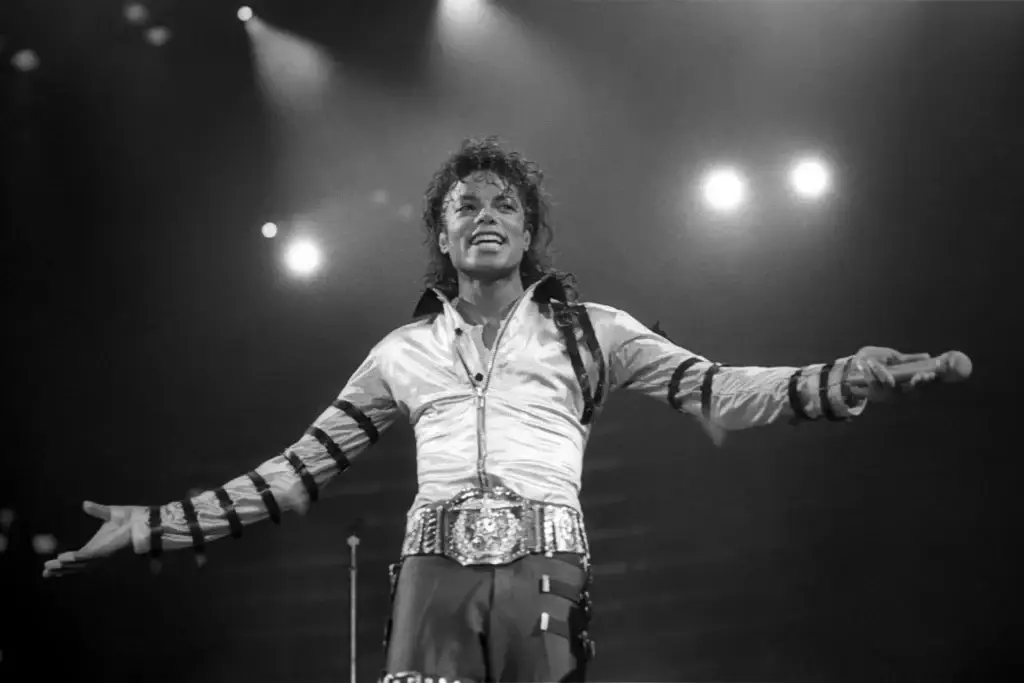
Perhaps that’s why Michael Jackson refuses to become history.
History is what happens when culture reaches a conclusion.
Not necessarily agreement, but conclusion. A broadly accepted understanding of who someone was, what they represented and where they belong in the story.
Michael Jackson never received that outcome.
Instead, nearly two decades after his death, the conversation remains open. Every documentary reopens it. Each biopic reframes it. Every lawsuit, podcast, reaction video and social media debate introduces another perspective.
Not because the facts keep changing, but because the meaning keeps changing.
For some, he represents artistic brilliance on a scale the world may never see again. For others, he represents uncomfortable questions about fame, power and accountability. Not surprisingly, for many, he represents both at once.
And perhaps that’s the point.
The man became a symbol.
The symbol became a debate.
And the debate became part of the legacy itself.
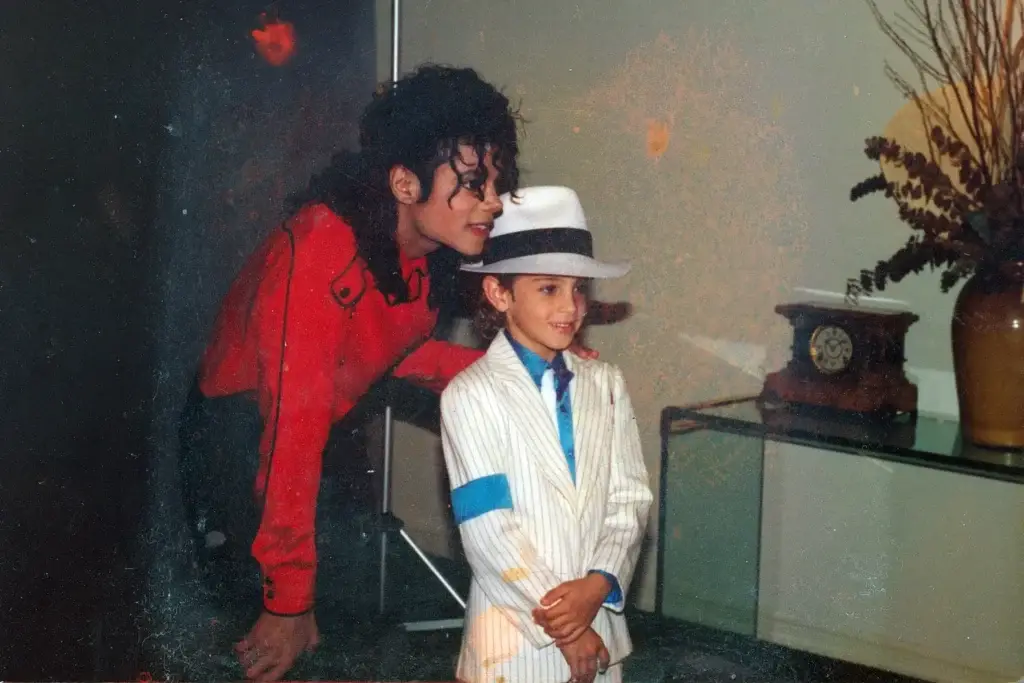
What’s particularly unusual is that some of the most significant chapters in that debate arrived after his death. New allegations emerged. Leaving Neverland reignited global scrutiny. Court cases continued. Fresh documentaries revisited old evidence. Entire generations encountered Michael Jackson through controversy and conversation before they ever encountered the music.
Most public figures leave behind a finished story.
Michael Jackson left behind an active one.
One that continues to acquire new chapters long after the author has left the page.
The commercial story tells a similar tale.
When Michael Jackson died in 2009, he reportedly carried debts exceeding half a billion dollars. By most standards, it looked less like the end of an empire and more like the aftermath of one.
Yet what followed was one of the most extraordinary posthumous brand turnarounds in modern history.
Through streaming, licensing, merchandising, stage productions, publishing rights and media projects, Jackson’s estate was transformed into a multi-billion-dollar enterprise. His catalogue continues to generate billions of streams. His estate remains among the highest-earning celebrity estates in the world.
Most artists spend a lifetime building a legacy.

Michael Jackson’s most commercially successful years arrived after he was gone.
To most people, death marks the end of relevance.
For Michael Jackson, it became another chapter.
For brands, there may be another lesson hidden in all of this.
We often assume the goal of branding is to be liked, understood or agreed upon. But cultural significance doesn’t always work that way.
The people, ideas and brands that leave the deepest mark on culture are rarely the ones everyone agrees on. They’re the ones people continue talking about, revisiting and reinterpreting long after the original moment has passed.
Relevance isn’t the same thing as popularity.
It’s endurance.
The ability to remain part of the conversation even as the conversation changes around you.
Nearly twenty years after his death, Michael Jackson remains culturally relevant not because the story is settled, but because it isn’t.
Which means the question is no longer who Michael Jackson was.
It’s whether culture will ever decide what Michael Jackson means.
And until it does, Michael Jackson won’t become history.
He’ll remain suspended somewhere between memory and meaning. Between archive and argument.
Not a story culture remembers.
A story culture is still trying to finish.
Written by

Rebecca Herbert-Thorp
Head of Operations Training Director